Skip to Content
  1. Home
  2. Services
Process and technology consulting · Lima

We sort out the process, then choose the technology

Eight service lines for mid-sized companies in Peru. Every project starts from one process and one business indicator, measured before anything is implemented. Odoo is one of the products we implement when the assessment justifies it.

The cost of standing still

When software arrives before the process, the disorder gets automated

Three situations that show up on the first process walk-through:

  1. Purchases are approved by email

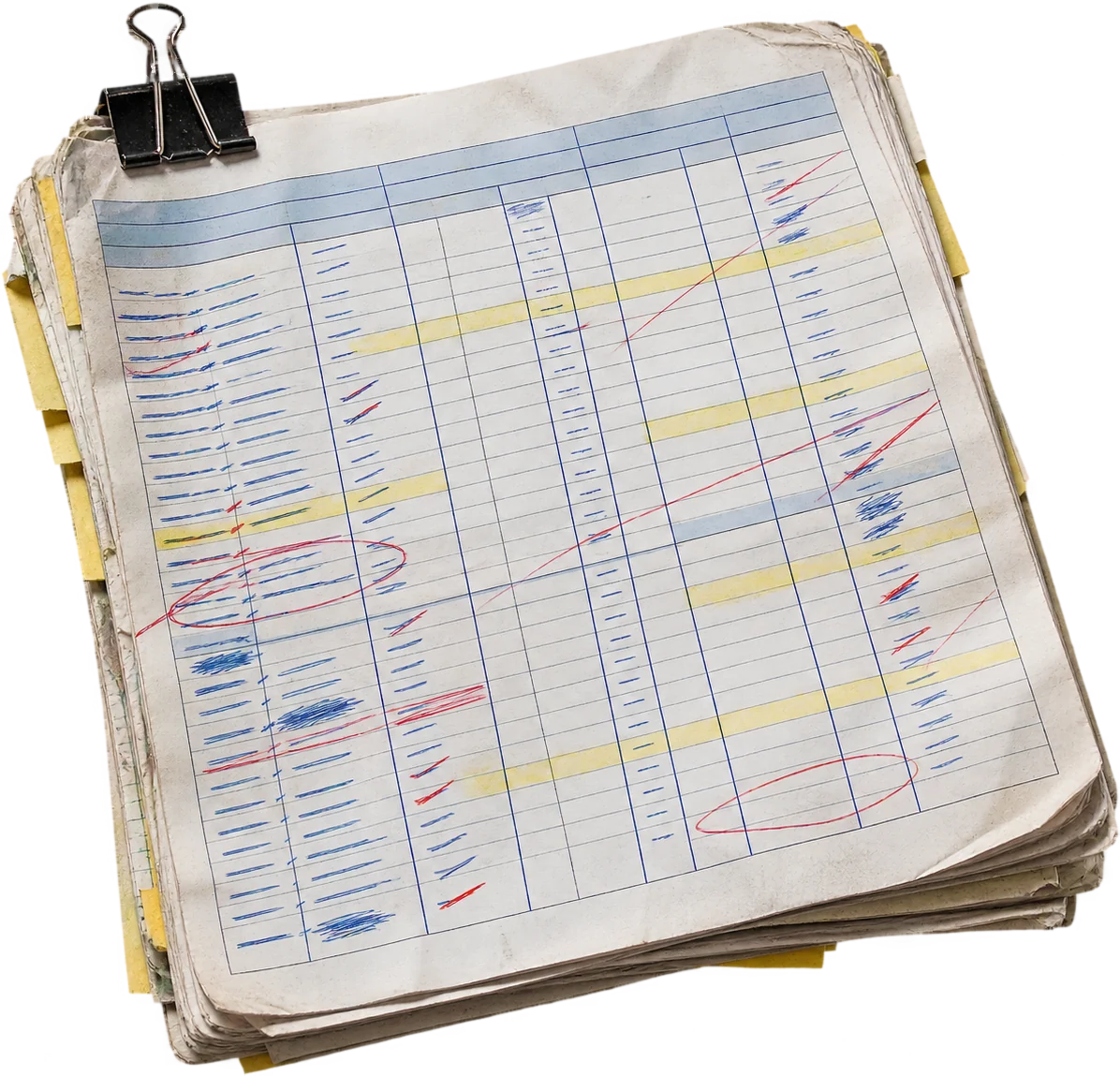
    Nobody knows how much of each budget line is committed until month-end, and goods are recorded days after they arrive.

  2. The system was chosen from a brochure

    The team goes back to spreadsheets for everything the ERP does not cover, and the system stops being the official record.

  3. Each department has its own tool

    The same order is keyed in by sales, the warehouse and accounting, and the margin report is assembled by hand at month-end.

DMG-RT method · F0 to F2

Technology is decided in three phases, before anything is bought

No configuration, automation or dashboard enters the plan without a business indicator to justify it and a measured baseline.

See the full method, F0 to F5

  1. F0

    Pre-qualification

    Is there a measurable problem and someone to sponsor it?

    An interview with management, half a day on site and a review of the system you already use.

    Deliverable

    Assessment proposal with scope per area and a calendar

  2. F1

    Assessment

    How much is the improvement worth, and where is it?

    Fifteen working days of interviews with process owners, end-to-end walk-throughs, work sampling and an analysis of how the ERP is really used.

    Deliverable

    Findings letter, preliminary baseline and an opportunity-to-technology matrix

  3. F2

    Design

    Which process and which technology move the indicator?

    Target process, business rules and a solution that matches the cause: Odoo configuration, automation, integration, dashboard or AI.

    Deliverable

    Baseline signed off by finance and an implementation plan in two-week cycles

Eight service lines

Pick the problem and see which line solves it

Each line works on one indicator and relies on specific systems. Select one to see its sheet.

Your processand the indicator that measures it
On-screen evidence

The indicator comes from the system, not from a separate spreadsheet

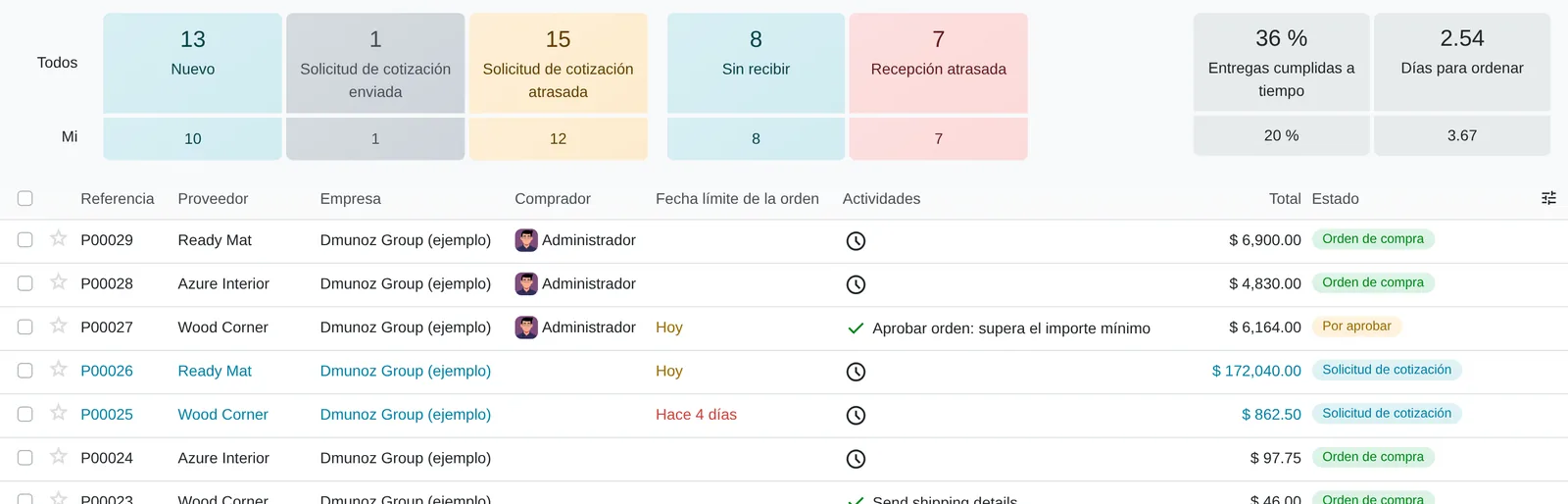
Standard Odoo 20, Purchase app. This is what the purchasing manager sees once approval and receipt are configured.

Swipe the screenshot to see the whole panel.

Request-for-quotation panel in Odoo 20 Purchase with statuses, late receipts and on-time deliveries
Real screenshot of standard Odoo 20 with demo data. It does not belong to a client.
  1. Requests by status: new, sent and late, per buyer.
  2. Orders not yet received and late receipts: the warehouse sees what is still due.
  3. On-time deliveries and days to order: the system calculates these indicators without anyone building a report.
Who runs your project

Diego Muñoz leads every project and works inside your operation

Process and technology consultant based in Lima. He runs the interviews, walks the process with your team and replies in person.

  • On site, with the process owners

    Your team runs the solution from the first week of go-live.

  • Control lives in your ERP

    Indicators, actions and minutes stay in your system, not in the consultant’s files.

  • Repeatable measurement

    Every committed indicator is calculated by a query or a dashboard. Manual measurement is only accepted for the baseline.

  • Explicit handover

    The project closes with named indicator owners, an operations manual and reviews at 3, 6 and 12 months.

About Diego and his background

Diego Muñoz, process and technology consultant
Frequently asked questions

Before the call

No. Odoo is one of the products we implement. If your current system covers the process, we build on it with integrations, dashboards or custom screens.

Not necessarily. The assessment reviews how the system is really used and which processes were left out. The improvement is often a matter of configuring what you have already paid for.

With the 30-minute assessment call: a conversation with Diego about one process and the indicator that measures it. If you prefer to prepare first, each sheet in the map links to a 6 to 8-minute self-assessment.

It depends on the scope the assessment defines. We quote a fixed fee per phase, and each phase ends in a deliverable you approve before moving on.

Yes. We work online and visit the operation when the process requires it. We work in Spanish, English and French.

Thirty minutes to decide where to start

We review one process, the indicator that measures it and which line to tackle first. It is phase F0 of the method and does not commit you to changing systems.

Diego Muñoz replies in person, during Lima office hours.

See guides and resources first

Systems Diego implements, integrates or assesses

The service lines apply to 73 types of system. The catalogue shows for each one whether Diego implements it, integrates it with your ERP or assesses and selects it with you.