A budget you compare against actuals every month
We review how it is built, who approves it and where actuals come from, before deciding whether an EPM tool is needed.
34 questions, result at the end, free of charge.
EPM system: definition and use
EPM or CPM (enterprise or corporate performance management) covers budgeting, forecasting, company consolidation and variance analysis against actuals.
Many mid-sized companies handle it with the ERP and a sound process. A dedicated tool is justified by several companies, many contributors or frequent scenarios.
Who it is for and when it does not fit
A good fit for
- Groups with several companies that consolidate every month
- Finance managers who build the budget with linked spreadsheets
- Boards asking for price, exchange-rate or volume scenarios
- Companies whose actual-versus-budget arrives late
Not a fit when
- A single company with a simple annual budget: the ERP’s analytic budget is enough
- The books do not close on time: the close is fixed first
- No area owns its budget
Cost of consolidating in spreadsheets
Gathering spreadsheets, checking links and reconciling versions takes days every month. Work out the cost with your own figures.
Example: two management control analysts at S/ 40 an hour. Replace the values with yours.
The estimate shows what the manual task costs today. It is not a savings promise.
Budget and consolidation cycle
An EPM system takes each area’s assumptions, builds budget versions, approves them and compares the ERP actuals against the current version every month. Consolidation adds up the companies, eliminates transactions between them and converts currencies.
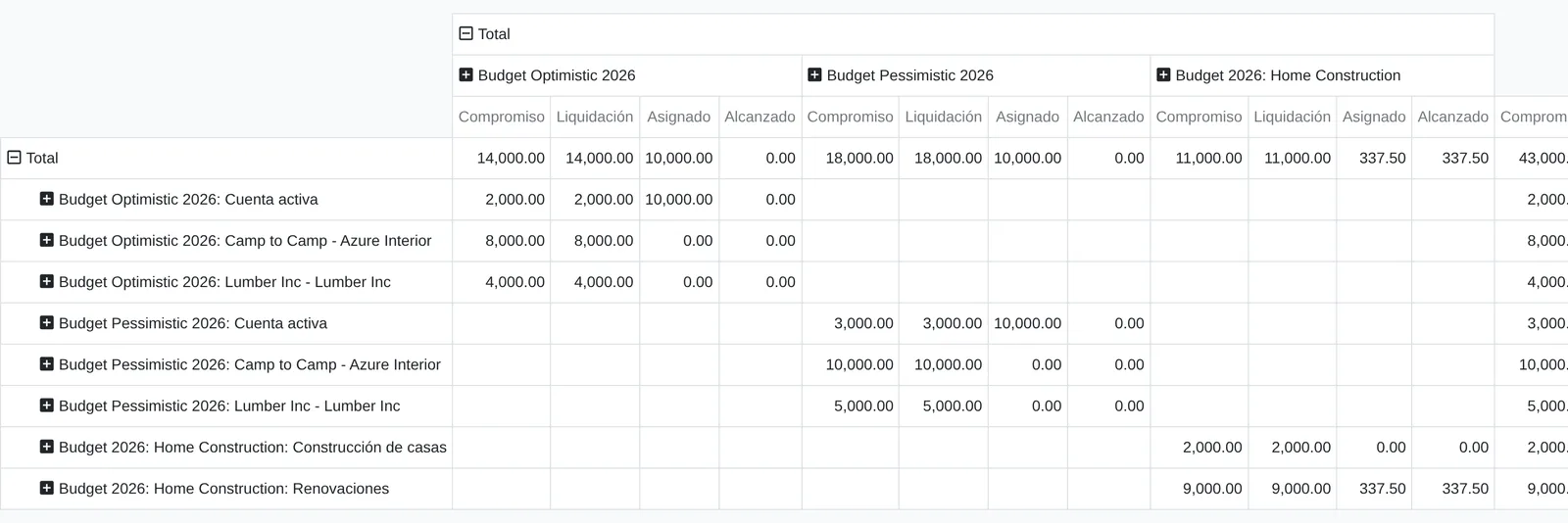
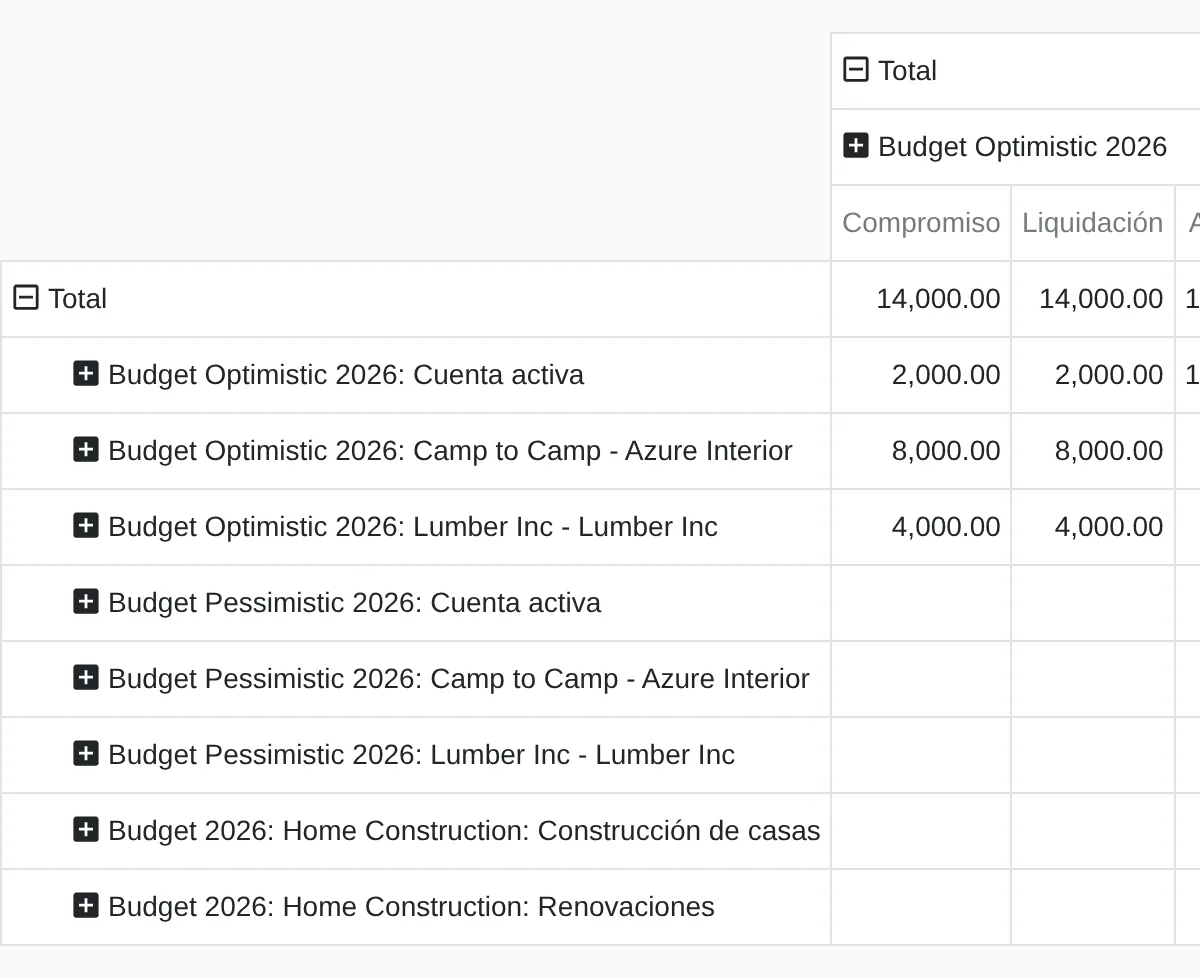
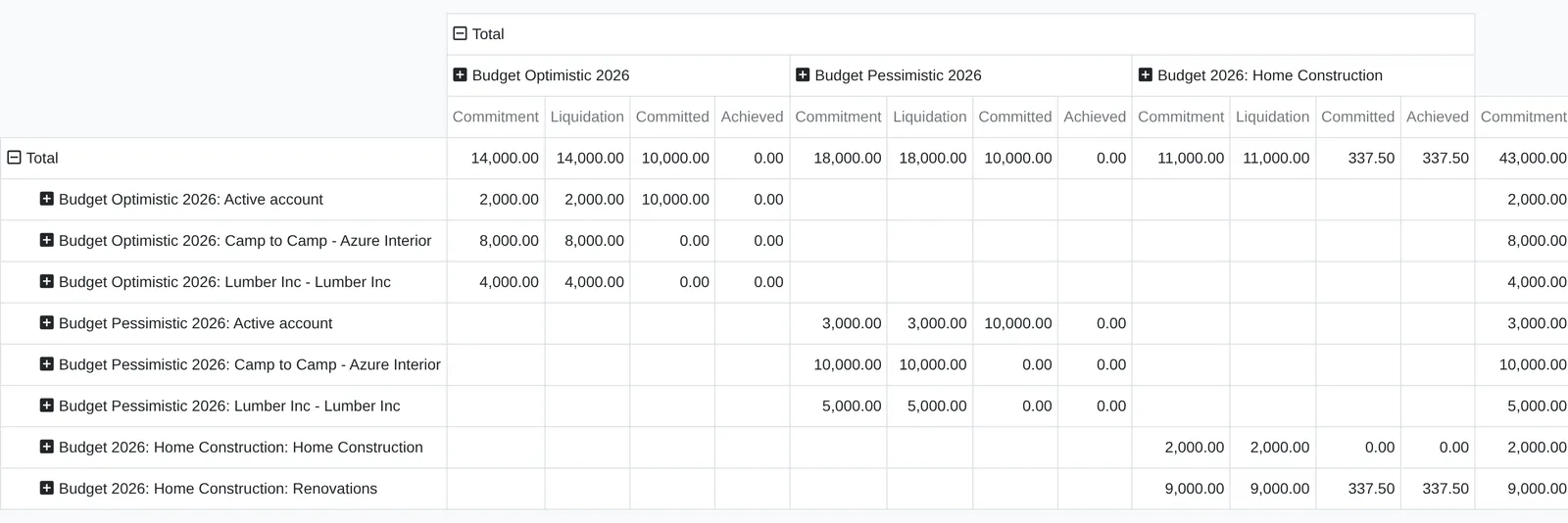
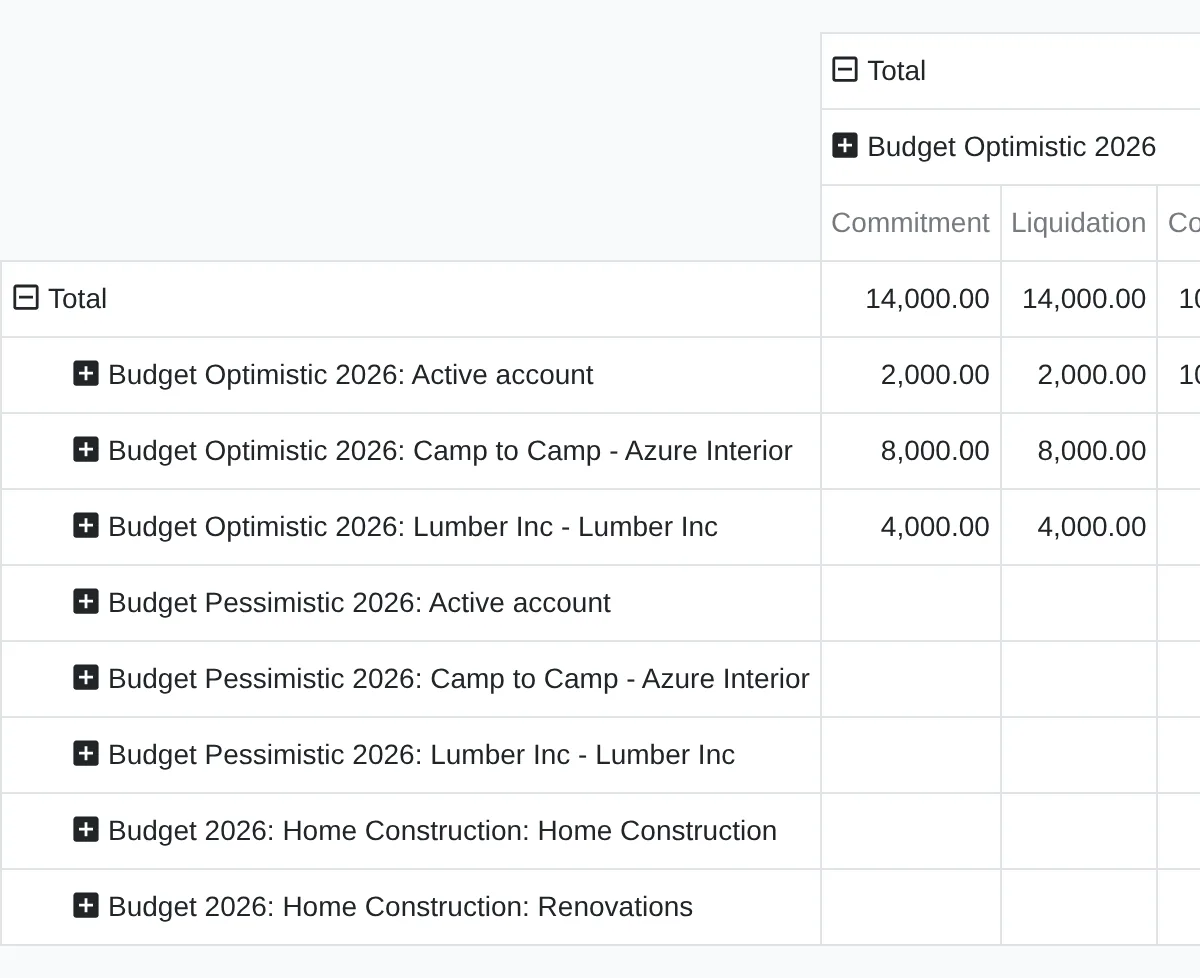
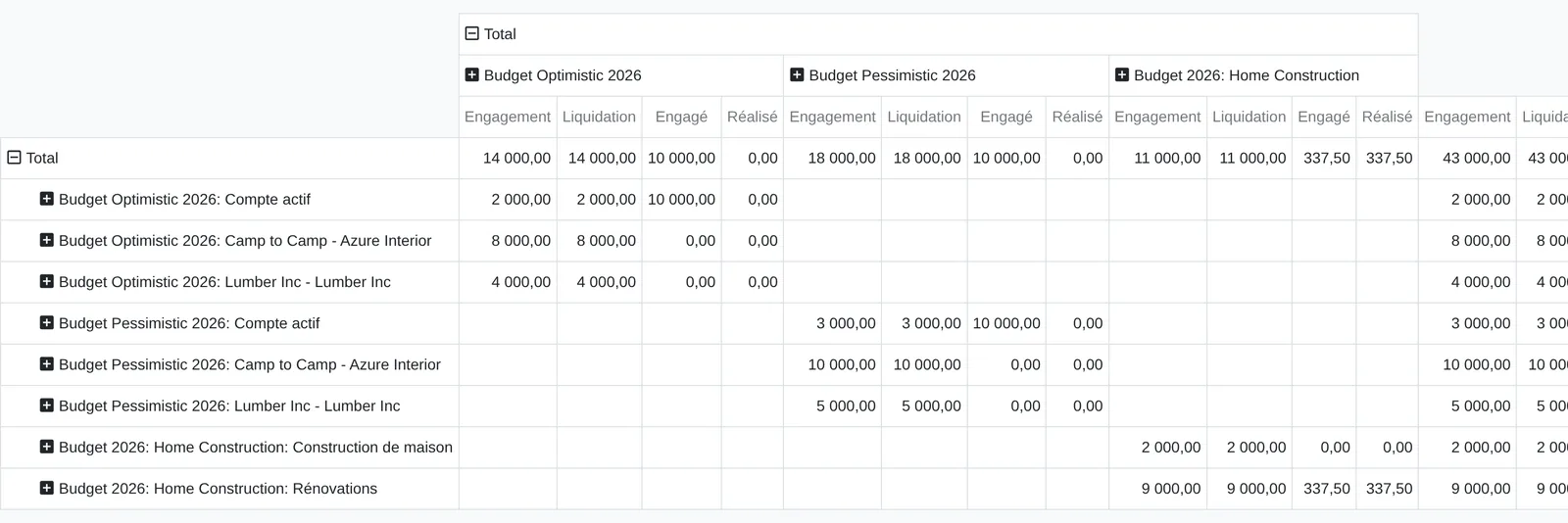
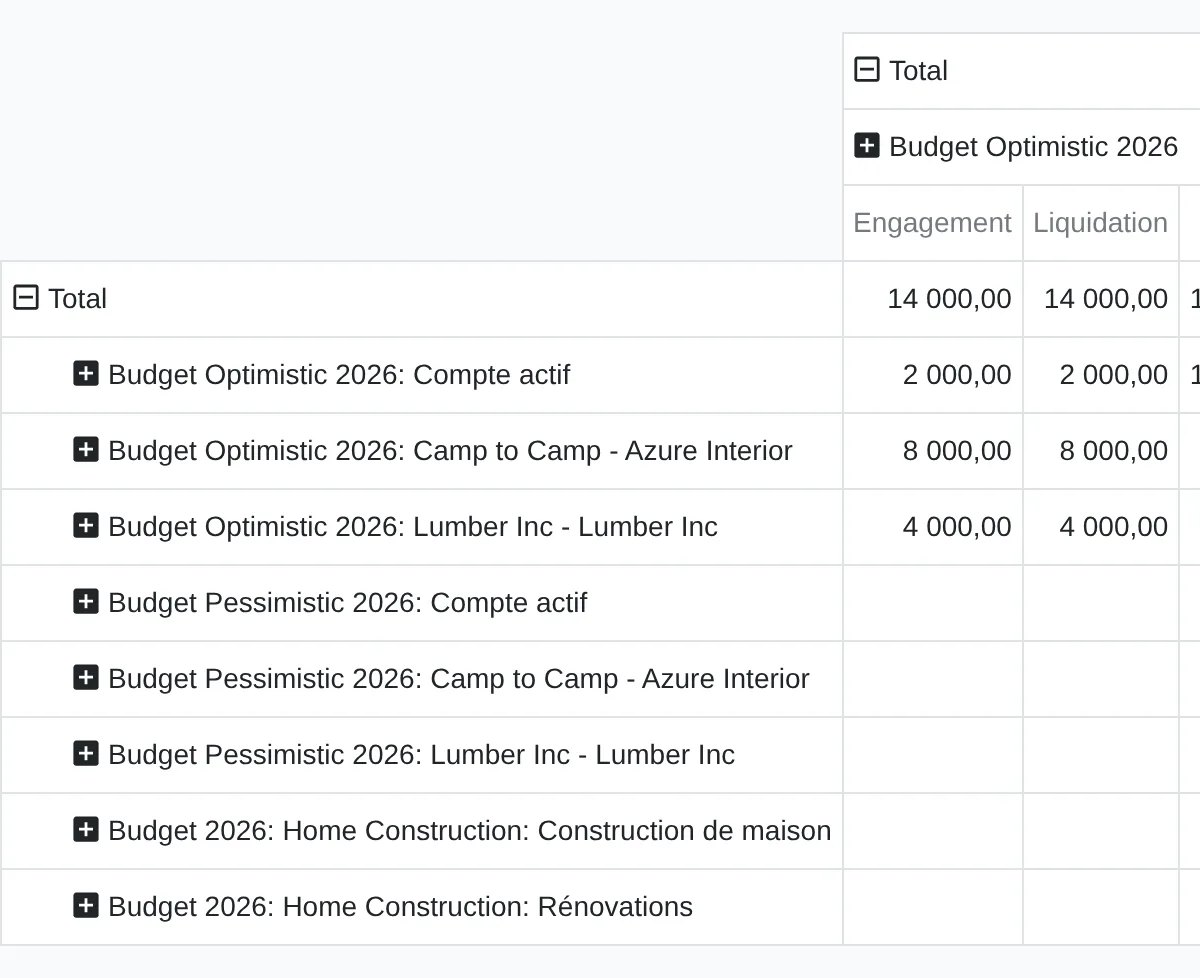
Odoo 20 covers part of it: the Budget Report compares budgeted, committed and achieved amounts by analytic account. It does not replace an EPM for scenarios or consolidation with eliminations.
Budget cycle
- Assumptions by area
- Approved version
- Actual versus budget
- Group consolidation
The method applied to budgeting and consolidation
Diego Muñoz leads every assessment: process and data first, then the tool, in short phases you approve.
Current cycle
We walk through the last budget cycle and a management close: who contributes what, in which format and how many days it takes.
Structures and sources
We review each company’s chart of accounts, cost centres and data sources to see what can be consolidated without adjustments.
ERP or dedicated tool
Using your requirements we decide whether the ERP is enough or an EPM tool is worth it, and compare two to four options.
Integration and process
We design the ERP integration and the variance review calendar. If a tool is chosen, its vendor implements it.
Deliverables
- Map of the budget cycle and management close
- Mapping table of accounts and cost centres across companies
- ERP-or-tool decision, with three-year total cost
- Data integration design with the ERP
Prerequisites and outputs
Prerequisites
- Chart of accounts and cost centres shared by the group companies
- Timely monthly close in each company
- Price, volume and exchange-rate assumptions with an owner
- List of intercompany transactions and their accounts
Outputs: versioned budget, scenarios and actual versus plan
- Budget versions with their approval
- Actual versus budget by area and account
- Consolidated financial statements with eliminations
- Compared scenarios for the board
Assessment dimensions
This analysis reviews the budget cycle, assumptions, the common structure across companies, the source of actuals, scenarios and variance follow-up. The questions describe how finance and the areas work today, from the budget template to the monthly results meeting.
What you receive
When you finish you receive a level per dimension of your financial planning and the gaps ordered by priority. Each gap states whether to solve it in the ERP or with a planning tool and the first verifiable action.
17 scored questions and 12 context questions (type of operation, size, current system). Context questions are not scored: they let us read the result against similar operations.
Market options
We do not implement EPM platforms. We help decide whether you need one, choose on your own criteria and connect the data to the ERP.
Odoo
Odoo Accounting offers analytic budgets and multi-company support, enough for many mid-sized companies with a sound process.
Odoo 20 technical modules
account_budgetanalytic
It is assessed on the same criteria as the other options.
Other options
Financial planning and consolidation platforms for groups with several companies, many contributors or scenario models.
- Oracle EPM Cloud
- Anaplan
- OneStream
- Workday Adaptive Planning
- SAP Analytics Cloud
- Planful
Internationally used EPM platforms; the list shows no preference.
Selection criteria
- Consolidation with eliminations tested on two real companies
- ERP connector that reads balances without manual export
- Versions and scenarios the finance team maintains on its own
- Licences per planning user and per viewing user
Limits of the standard product
EPM implementation
How it is handledWe do not do it: the chosen vendor does, with our coordination
Budget in Odoo without scenarios
How it is handledIt serves for control by analytic account; scenarios are modelled elsewhere
ERP data of uneven quality across companies
How it is handledAccounts and cost centres are harmonised before connecting
Peruvian localisation
- Financial statements under PCGE and under IFRS when the group requires it
- SUNAT or closing exchange rate per group policy
- Reports to the SMV for supervised companies
Assessment, selection and integration
Budget cycle assessment
Walk-through of the cycle, data structures and management close times.
Tool selection
ERP or EPM platform, compared against your requirements and budget.
ERP integration
Design of the flow of actuals and operational data into the plan.
Vendor coordination
We support the implementation done by the chosen vendor, with your requirements in hand.

I assess your budgeting and consolidation process, help you choose between solving it in the ERP or with a planning tool, and design the data integration with the ERP. Implementing an EPM platform is done by its vendor.
Systems that connect with budgeting and consolidation
Planning takes accounting actuals, projected demand and the cash forecast, and returns targets by cost centre. The links lead to each system’s assessment.
Before you start
Not always. With one or two companies and few contributors, the ERP and a sound process are usually enough. The assessment tells you which case you are in.
No. We assess, help you choose and connect the data to the ERP. The platform vendor does the implementation.
Yes. The assessment measures the process and data structures, with any ERP.
The online assessment and the 30-minute review are free. Later work is quoted by phase.
Only Diego Muñoz, to prepare the review. They are not shared with third parties.
Start with the online assessment
At the end you see your level and where to start. If you like, we review it in a 30-minute video call with Diego Muñoz.
WhatsApp +51 919 488 260 · damunoz@dmunozgroup.com