- Home
- Systems
- People
- Human capital management
One employee record per person, connected to payroll
Contracts, staff changes, leave and exits in one system used by HR and managers, with role-based access and expiry alerts.
Online assessment of employee records and staff changes: 39 questions, results by dimension when you finish, free of charge.

What an HCM is and what it solves
An HCM (human capital management system), also called an HRIS, keeps each employee's record: contract, role, department, schedule, leave, performance and exit. Payroll, time and attendance and system access all read from it.
It solves a concrete problem: HR updates staff data in several files and finds differences every time a contract or role changes.
Processes it covers
Signs your company needs an HCM
If three or more describe your HR team, the assessment shows whether to start with records, access rights or exits.
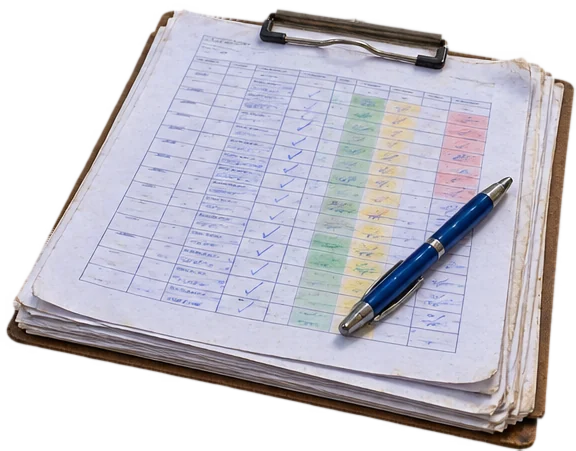
- Contracts and amendments are tracked in paper folders
- Exit dates and reasons are not recorded
- Managers cannot see or approve leave in a system
- Anyone with access can see salaries and personal data
- Schedules change and contracts are not updated
- Performance reviews are done on loose forms
- Each group company keeps its records separately
Who an HCM is for and when it does not fit
Who it is for
- Companies with more than one site or legal entity that keep separate records today
- HR heads who reconcile the staff list with payroll and finance every month
- Operations with fixed-term contracts expiring every month
- Management that wants line managers to approve leave without going through HR
When it does not fit
- Few people, one site and a single employment regime: a spreadsheet with an owner and expiry alerts may be enough for now.
- If the main problem is payroll calculation, start with the payroll system and leave employee records for the second phase.
- If nobody in HR owns the data, the system reproduces the disorder. The owner is named first.

The cost of keeping records in loose spreadsheets
Every staff change is keyed in by HR, by payroll and sometimes by accounting. The error shows up on a payslip, in an expired contract or in access nobody removed.
- Fixed-term contracts that expire with no written renewal
- Different headcount figures in each department
- Active accounts for people who have left
- Incomplete files when SUNAFIL inspects
Example values you can edit. Count the hours spent keying the same hire into HR, payroll and accounting. The result does not estimate savings.
Assessment method for an HCM
Seven dimensions of the DMG-RT method, derived from TOGAF. For an HCM, the questions follow the employee record from hiring to exit. Each is scored 0 to 4 on facts you can check.
Process
How the record is created at hiring and how role, pay and schedule changes are recorded.
Data
Whether there is one staff register with an owner and whether figures match payroll and finance.
System coverage
How much of leave, permissions and changes lives in a system and how much in sheets or messages.
Integration
How many times a hire or exit is keyed in and whether an exit removes access.
Measurement and follow-up
Whether turnover, untaken leave and expiring contracts come out automatically and someone acts.
People and adoption
Whether managers approve in the system and whether more than one person can run it.
Compliance and control
Mandatory file documents, contract expiry and role-based access under Law 29733.

What an HCM project needs and what it delivers
What your company provides
- Current staff list: ID, role, department, site, start date and contract type
- Organisation chart with managers and cost centres
- Current contracts and amendments, scanned or on file
- Leave policy and the absence types you use today
- A list of who may see salaries and health data
- An HR owner with hours set aside to validate the load
What you receive
- Employee form in Odoo with contract, role, schedule and documents
- Departments with their manager and cost centre
- Leave approved by the direct manager
- Alerts for contracts and documents about to expire
- Access groups for managers, HR and management
- Incomplete-records report and a manual per role
Steps of an HCM project
Employee record assessment
Ten minutes. The radar shows where the record cycle breaks: hiring, changes, leave or exit.
Review with a real record
Twenty minutes. Diego goes through your answers next to a sample record and decides whether to start with data or access rights.
Employee lifecycle workshop
Half a day with HR and a line manager: the path from hiring to exit and mandatory documents per contract type.
Rollout with Odoo Employees
Two-week cycles: structure and roles, record loading, leave with approval and role-based access. KPI: complete records over total.
Market options for an HCM
HCM platforms differ in the company size they were built for and in how they connect to Peruvian payroll. The list is not a ranking.
Odoo
Odoo Employees, Time Off, Appraisals and Skills, connected to payroll and accounting in the same database.
Odoo is the platform Diego implements. If the assessment points to another one, the written comparison uses these same criteria.
Other platforms
- Workday HCM
- SAP SuccessFactors
- Oracle HCM Cloud
- Buk
- BambooHR
- Factorial
Trademarks belong to their owners.
Comparison criteria
- Role-based access to salaries and health data
- Leave approval by the direct manager
- Several legal entities and sites in one database
- Hires and exits that reach payroll without re-keying
- Total cost over three years by active employees
- Export of records with their documents if you switch
Limits of an HCM and how they are handled
- Odoo Employees does not calculate Peruvian payroll. The calculation lives in the payroll system, which reads the record.
- The historical paper archive does not digitise itself. The project defines which documents are scanned and in what order.
- Performance reviews record the scale the company defines. The system does not replace that definition.
- A report for SUNAFIL comes out complete only if the records were loaded in full.
Services for an HCM
Assessment and review
- Online assessment of the record cycle
- 30-minute review with a real record
- Free of charge
You answer it
Employee lifecycle workshop
- Hiring-to-exit path drawn with HR
- Mandatory documents per contract type
- Role-based access matrix
The HR head approves it
Implementation with Odoo
- Structure, roles and records loaded
- Leave with manager approval
- Manual per role
You approve each delivery
Follow-up support
- First hires and exits supported
- Complete records measured against the baseline
- Support on WhatsApp
Renewed by period
Diego implements the HCM with Odoo Employees and Time Off, connected to payroll and accounting. If selection points to another platform, he helps you choose it and connects it to your ERP.
Systems that connect to an HCM
Payroll (Peru)
Hires, exits and pay changes flow into payroll without re-keying.
See the systemWorkforce management and time attendance
The schedule in the employee record is the rule each punch is read against.
See the systemApplicant tracking system
The hired candidate arrives in the record with their data and documents.
See the systemLearning management system
The role defines which courses each person must take.
See the systemIdentity and access management (SSO)
A recorded exit removes access to systems.
See the systemAccounting and financial ERP
Cost centres and departments match the staff structure.
See the systemEnvironment, health and safety
Medical exams and safety training are kept in the record.
See the systemAssessment in 10 minutes: HCM
This analysis measures how your company keeps each employee's file, records placements, absences and changes, and controls labor documents and access. The questions describe observable situations in HR, among service supervisors and at payroll close.
Scored dimensions
- Hires, changes and placements. It observes whether each hire, change of position, salary, schedule or placement site follows an approved workflow and updates the employee file and contract.
- Single record and headcount. It observes whether each employee's data sits in one record and whether headcount, turnover and payroll come from the same source.
- Vacation, leave and cover. It observes whether vacation, leave and medical rest are requested and approved in the system, with balance, and whether the post stays covered.
- Labor documents and expiries. It observes whether the documents required for each worker, each client's site entry requirements and fixed-term contract expiries are controlled.
- Access, privacy and continuity. It observes who sees salaries and health data, how access is revoked when someone leaves and whether HR records keep running when their owner is absent.
What you receive
When you finish, you receive your level in each personnel management dimension and the gaps ranked by priority. Each gap comes with a first action you can verify in your HR record or payroll.
18 scored questions and 16 context questions (type of operation, size, current system). Context questions are not scored: they let us read the result against similar operations.
Frequently asked questions: HCM
An HCM makes sense once records live in several files or there is more than one site or legal entity. With few people, the assessment may recommend sorting out the process before buying software.
The HCM stores who each person is and under which conditions they work; payroll calculates what they are paid. Payroll should read from the record, not the other way round.
The migration starts with the data other processes use (ID, role, department, start date, current contract), and documents are digitised by priority. Full history can come later.
Setup includes role-based access: managers see their team and only HR sees salaries and health data, as Law 29733 requires.
If your case calls for another platform, selection compares options against your criteria and Diego helps you choose. Odoo is the implementation he offers directly.
Measure your HR management in 10 minutes
Ten minutes to find out whether your employee records are ready to connect to payroll. Diego Muñoz reviews the result with you, in Lima business hours.
WhatsApp +51 919 488 260 · damunoz@dmunozgroup.com