One record for purchasing, stock and accounting
Odoo 17 to 20 · SUNAT and PLE · TOGAF architecture

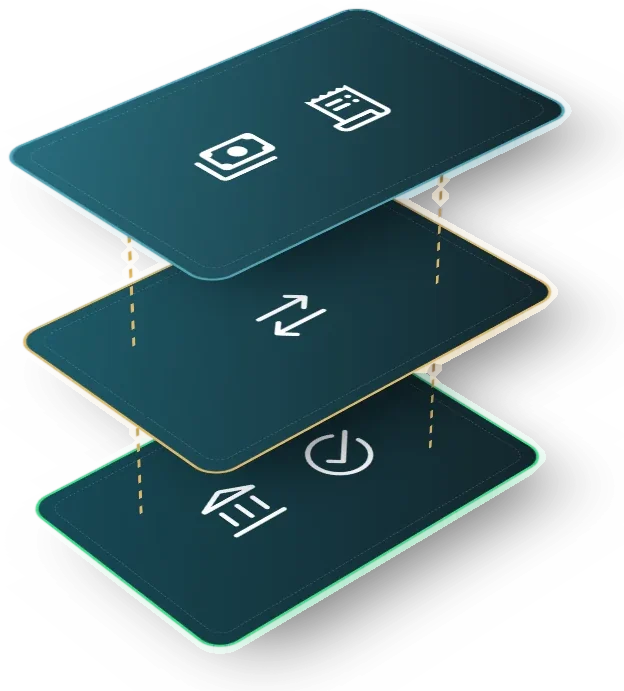
Three systems record the same purchase
Each department records the same thing in a different system, and the month-end close is reconciled by hand.
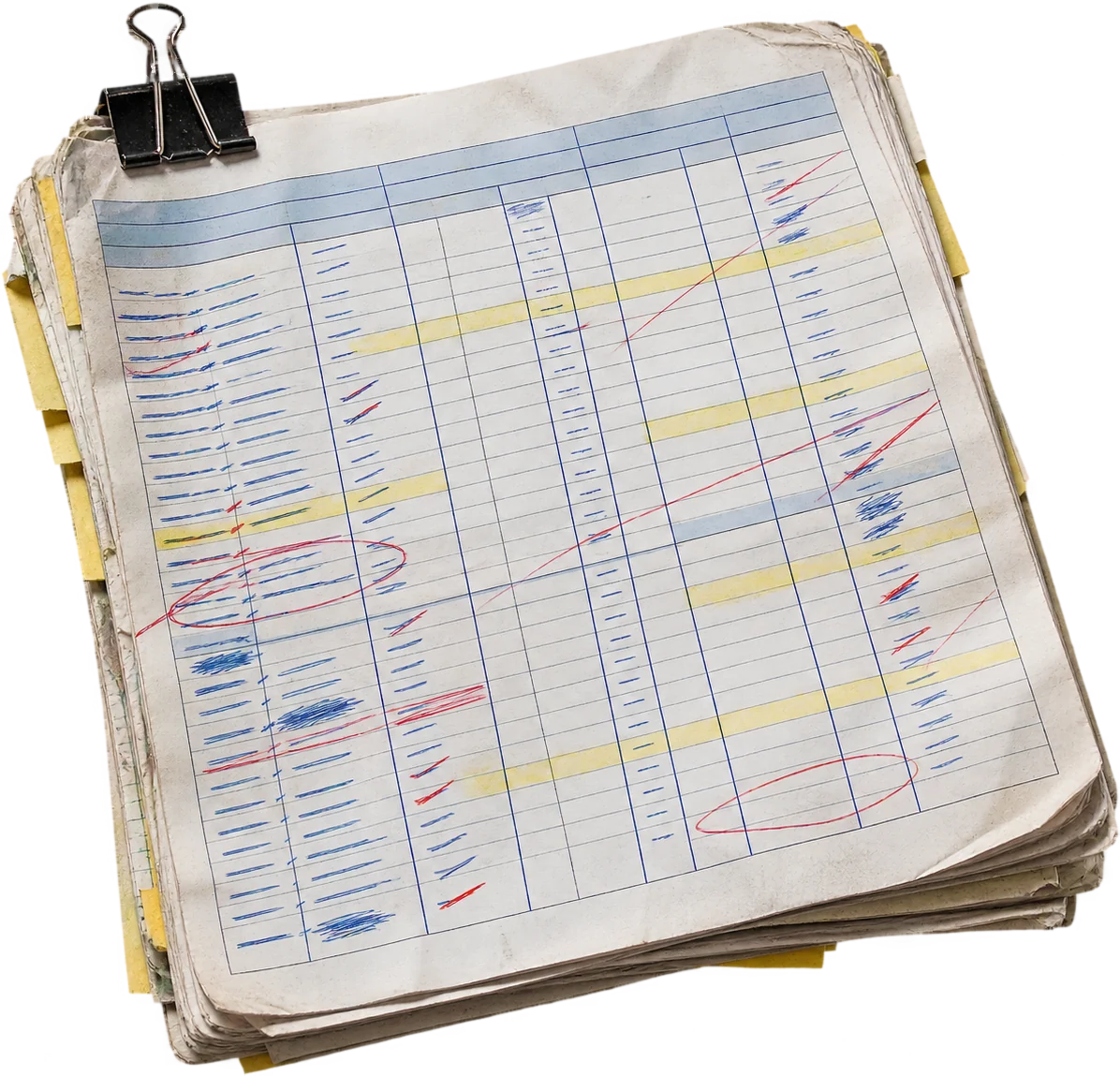
What double entry costs you today
Enter how many people key purchases or invoices into more than one system. The result is yours: Diego uses it as the first baseline in the assessment.
Every Odoo module comes in with a measured indicator
DMG-RT is Diego's working method. In an ERP project the process is measured first, then designed, then configured in two-week fronts.
- F1
Assessment
A walk through purchasing, stock and month-end close with the people who do it, plus a review of the current system: which data is usable and what is recorded outside it.
Deliverable Findings letter and preliminary baseline, in 15 working days
- F2
Design
Target process, Odoo modules and chart of accounts. Each front carries one indicator: days to close, inventory accuracy or unit purchase cost.
Deliverable Baseline signed off by your finance team
- F3
Implementation and control
Two-week cycles in a test environment. Your team runs the system from the first go-live and the indicator is tracked on an Odoo dashboard.
Deliverable Solution in production and progress minutes every two weeks
- F4
Stabilisation and handover
Operating manual per role, technical documentation, and access and licences in your company's name.
Deliverable Closing record and reviews at 3, 6 and 12 months
A fixed fee per phase, agreed before each one starts. See the full method
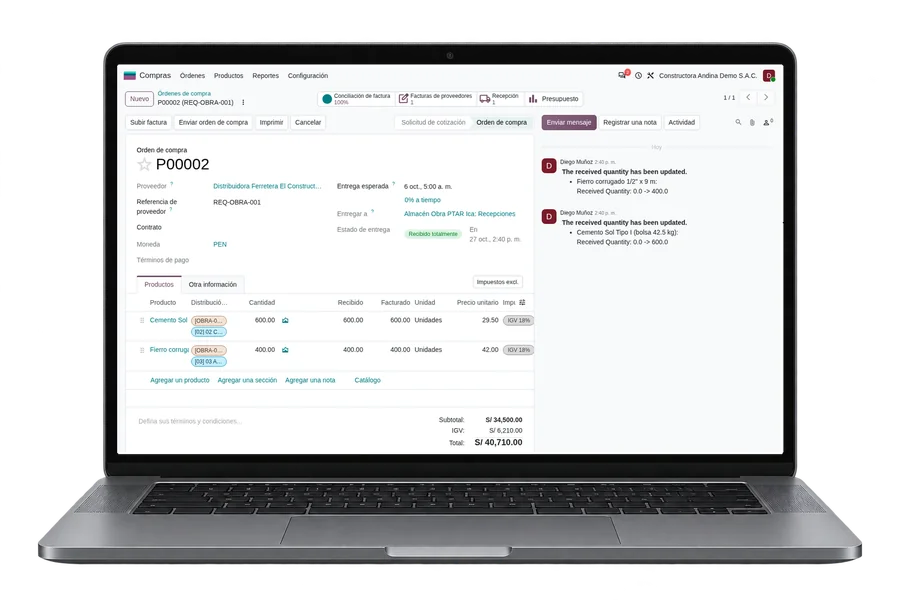
The full cycle, on real screens
Odoo demo instance with fictitious data. Swipe through each step, from budget to invoice.


Budget by line item
Each line item shows committed, allocated and achieved amounts.
Demo instance, fictitious data.

Purchase order
It starts from the request and charges the cost to the right line item.
Demo instance, fictitious data.

Warehouse receipt
The storekeeper confirms quantities and stock updates instantly.
Demo instance, fictitious data.

Supplier bill
It is matched to the order and leaves the journal entry ready.
Demo instance, fictitious data.

Progress billing and invoice
Project progress is invoiced per line item, with IGV (VAT) and detracción withholding.
Demo instance, fictitious data.
Your accountant stays on the project and your data arrives reconciled
Odoo removes double entry. Accounting judgement stays with your accountant, who reviews the chart of accounts and opening balances before cut-over.
The systems that go into an ERP project
Each page explains what the system solves, what it needs and how to choose it.
- ERPPurchasing, stock, sales and accounting in one database
- AccountingA month-end close without manual reconciliation
- E-invoicingInvoices that come from the sale and do not bounce back
- Electronic booksPLE books straight from the system, no TXT editing
- Warehouse (WMS)Every product in its location, every order checked
- Planning (MRP)The materials the plan needs, when it needs them
- Point of saleA till that balances itself at the end of the shift
- CRMNo sale depends on a rep's memory
Odoo as a product: versions, licences and modules
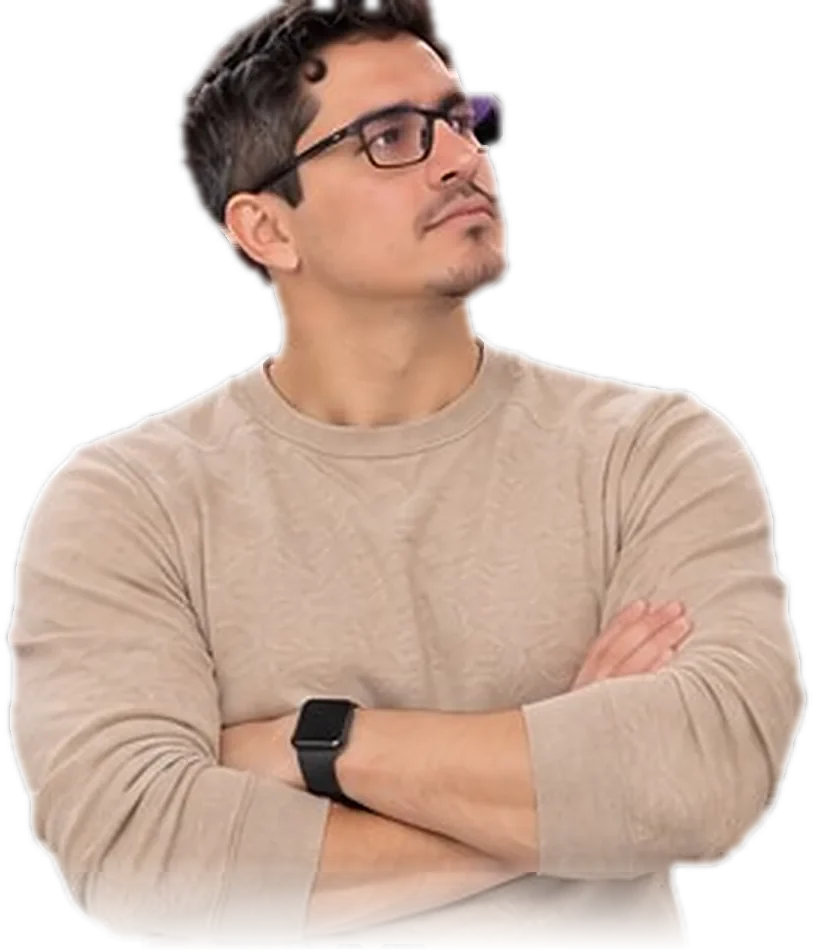
Diego Muñoz leads every implementation
Diego is a process and technology consultant based in Lima. He implements Odoo versions 17 to 20 with Peruvian localisation and designs systems architecture with TOGAF.
In an ERP project he sits in the design meetings, reviews every configuration in the test environment and runs the indicator review with your team every two weeks.
He measures before configuring because the benefit of an ERP is calculated against a baseline. Without one there is no way to tell whether the close or the inventory improved.
Licences, data and timelines in an Odoo project
Review your purchasing cycle with Diego before choosing modules
In 30 minutes you go through how a purchase is recorded in your company today, where it is duplicated and which indicator to measure first.
 Diego Muñoz replies in person, on Lima time.