- Home
- Systems
- People
- Peruvian payroll
Payroll that closes without last-minute recalculations
Income tax withholding, CTS, bonuses and settlements calculated with tested rules, with PLAME, payslips and the journal entry coming from the same figures.
Online assessment of your payroll close: 40 questions, results by dimension when you finish, free of charge.
What a payroll system is and what it solves
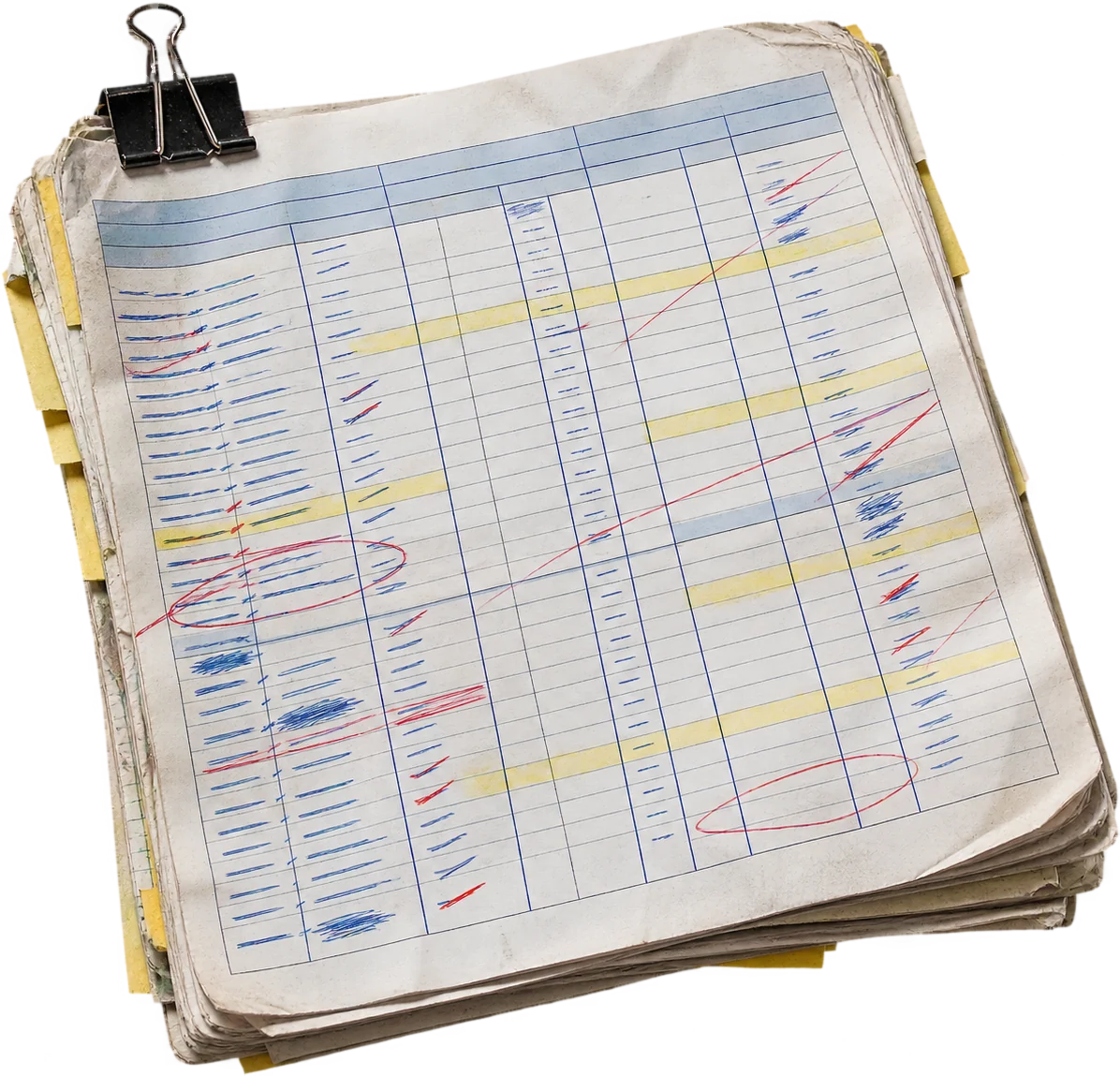
A payroll system calculates pay, contributions, fifth-category income tax withholding, CTS severance deposits, statutory bonuses, profit sharing and settlements, and produces the PLAME filing for SUNAT and payslips.
It solves a concrete problem: payroll is calculated in Excel and income tax, CTS and bonus recalculations are done by hand every time a change comes in.
Processes it covers
Signs your company needs a payroll system
If three or more happen in your close, the assessment shows whether the problem lies in the rules, the history or the link to attendance.
- Payroll is calculated in Excel and then keyed into the system
- Income tax withholding is recalculated by hand
- CTS and bonuses deduct absences or leave twice
- Profit sharing is calculated outside the system
- Final settlements take days
- The benefits accrual does not match payroll
- A new pay item needs a developer
Who a payroll system is for and when it does not fit
Who it is for
- Companies that calculate payroll in Excel and then key it into another system
- Accounting teams that adjust the CTS, bonus and leave accruals every month
- Companies with more than one employment regime or with overtime every month
- Payroll teams that depend on one person to close
When it does not fit
- If an accounting firm runs payroll and control works, recovering the data and reviewing each close may be enough.
- If hours and absences are not in order, the calculation inherits the error. Time and attendance comes first.
- If you need a regime the localisation add-ons do not cover, selection compares another platform before committing to Odoo.
The cost of payroll recalculated by hand
A badly written spreadsheet rule repeats on every payslip. The error is found when a worker complains or when SUNAT questions the filing.
- Recalculations in the last week of the close
- Income tax withholding that does not reconcile in December
- Benefit accruals adjusted by hand in accounting
- Dependence on the one person who understands the spreadsheet
Example values you can edit. Count the hours spent calculating, checking and recalculating in closing week. The result does not estimate savings.
Assessment method for a payroll system
Seven dimensions of the DMG-RT method, derived from TOGAF. For payroll, the questions follow the monthly close from cut-off date to journal entry. Each is scored 0 to 4 on facts you can check.
Process
The closing schedule, cut-off dates and what happens to late changes.
Data
The pay history used by income tax, CTS and bonuses, and whether the accrual matches accounting.
System coverage
Whether CTS, bonuses and settlements are calculated in the system and how a new pay item is added.
Integration
How hours arrive from attendance and how the bank file and journal entry leave.
Measurement and follow-up
Days to close, recalculations from errors and complaints with their cause.
People and adoption
How many people can close payroll alone and how regulatory changes are tracked.
Compliance and control
PLAME, payslips, income tax withholding and who can change salaries.

What a payroll project needs and what it delivers
What your company provides
- Payrolls paid in recent months, with payslips and PLAME filings
- Pay history used by income tax, CTS and bonuses
- Employment regimes and pay items you pay today
- Overtime, lateness and absences for the period, in whatever format you have
- Chart of accounts and cost centres for the payroll entry
- Your bank's payment file format
What you receive
- Salary rules configured and tested per regime
- Payslips and files for the PLAME filing
- Income tax, CTS, bonuses and settlements calculated
- Payroll entry and accruals from the same figures
- Bank payment file from the approved payroll
- Written procedure to update the UIT, minimum wage and rates
Steps of a payroll project
Close assessment
Ten minutes. The radar shows whether the close fails on rules, history, hours from attendance or change control.
Review with a real payslip
Twenty minutes. Diego goes through your answers next to a paid payslip and decides which pay items are tested first.
Calculation rules workshop
Rules written per regime and pay item, and test cases built: a hire, an exit, a leave of absence and overtime.
Rollout with Odoo Payroll
Two-week cycles and one month in parallel with the current system, payslip by payslip. KPI: days to close and recalculations.
Market options for a payroll system
For Peruvian payroll, what weighs most is coverage of local rules, tested with real cases before buying. The list is not a ranking.
Odoo
Odoo Payroll with Peruvian localisation add-ons. Peruvian payroll is not in standard Odoo: it is configured with rules per regime and test cases.
Odoo Payroll, with Peruvian localisation add-ons, is the platform Diego implements. If your regimes are not covered, the comparison with other options uses these criteria.
Other platforms
- Buk
- SAP SuccessFactors Employee Central Payroll
- ADP
- Ofisis
- Starsoft Planillas
- SUNAT PLAME and T-Registro
Trademarks belong to their owners.
Comparison criteria
- The Peruvian employment regimes you need, with test cases
- Income tax with projection and December true-up
- PLAME and payslips without hand-built formats
- Journal entry and accruals in your chart of accounts
- Who updates the rules when regulations change
- Total cost over three years per employee on payroll
Limits of a payroll system and how they are handled
- Standard Odoo Payroll has no Peruvian rules. They come from localisation add-ons and are validated with test cases before the first payment.
- Each special regime is reviewed separately. If the add-on does not cover it, the rule is configured or another platform is assessed.
- Payroll calculates with the hours it receives. Disordered attendance carries the error onto the payslip.
- The filing is submitted through SUNAT's systems. Odoo prepares the files.
Services for a payroll system
Assessment and review
- Online assessment of the monthly close
- 30-minute review with a real payslip
- Free of charge
You answer it
Calculation rules workshop
- Written rules per regime and pay item
- Test cases for hire, exit, leave and overtime
- Closing schedule with cut-off dates
The payroll head approves it
Implementation with Odoo Payroll
- Rules configured and tested
- History migrated and reconciled
- One month in parallel, payslip by payslip
You approve each delivery
Follow-up support
- First closes supported
- Days to close measured against the baseline
- Support on WhatsApp
Renewed by period
Diego implements payroll with Odoo Payroll and Peruvian localisation add-ons, connected to attendance, accounting and the bank. If your case calls for another platform, he helps you choose it and connects it to your ERP.
Systems that connect to a payroll system
Human capital management
The employee record gives payroll the contract, role, salary and start date.
See the systemWorkforce management and time attendance
Overtime, lateness and absences arrive approved, without re-keying.
See the systemAccounting and financial ERP
The payroll entry and accruals come from the same figures.
See the systemTreasury and cash management
The bank payment file is generated from the approved payroll.
See the systemBusiness intelligence and data warehouse
Staff cost by department and project for management.
See the systemAssessment in 10 minutes: payroll
This assessment measures how your company closes Peruvian payroll, from assigned staff timesheets to the payslip, the journal entry, PLAME and T-Registro. The questions describe observable situations, such as where CTS is calculated or how overtime at a site reaches payroll.
Scored dimensions
- Monthly payroll close. Looks at whether payroll is closed on a schedule, with cut-off dates for changes and a record of close days and recalculations.
- Timesheets and client assignment. Looks at how hours, absences and overtime of assigned staff reach payroll, and whether it is known at which client each worker was each day.
- Benefit and pay item calculation. Looks at where severance fund (CTS), bonuses, vacations and final settlements are calculated, how pay items are created and whether the pay history is complete.
- PLAME, T-Registro and fifth-category tax. Looks at whether PLAME, T-Registro movements and fifth-category withholding come from payroll and are reconciled before filing.
- Payment, journal entry and cost per client. Looks at how payments reach the bank and the entry reaches accounting, whether they match payroll and whether staff cost can be seen per client or contract.
- Access, complaints and continuity. Looks at who can change salaries and pay items, how pay complaints are handled, how regulatory changes are tracked and how many people can close payroll.
What you receive
When you finish you receive your level in six payroll dimensions and the gaps ranked by priority. Each gap comes with a first action the payroll team can verify at the next close.
19 scored questions and 16 context questions (type of operation, size, current system). Context questions are not scored: they let us read the result against similar operations.
Frequently asked questions: payroll
Odoo includes a payroll engine, but Peruvian rules (income tax, CTS, bonuses, PLAME) are added with localisation add-ons and validated with test cases per regime before the first payment.
The recommended approach is at least one month in parallel with the current system, comparing payslip by payslip before switching it off.
Income tax, CTS and bonuses use previous months. Before migrating, that history is rebuilt and reconciled with the last payroll paid.
If an accounting firm calculates it today, the assessment shows which data to recover and whether to bring it in-house or keep outsourcing with better control.
The UIT tax unit, minimum wage and rates change. Part of the work is leaving an owner and a procedure to update and test each change.
Measure your payroll in 10 minutes
Ten minutes to see where in the close the recalculations start. Diego Muñoz reviews the result with you, in Lima business hours.
WhatsApp +51 919 488 260 · damunoz@dmunozgroup.com