Purchase approvals with an owner and a deadline
Diego Muñoz reviews with your team how each purchase is requested, approved and paid. Once those rules are written down, the system tells the right person it is their turn to sign and how long the order has been waiting.
Odoo 17 to 20, Peruvian SUNAT localization and TOGAF enterprise architecture
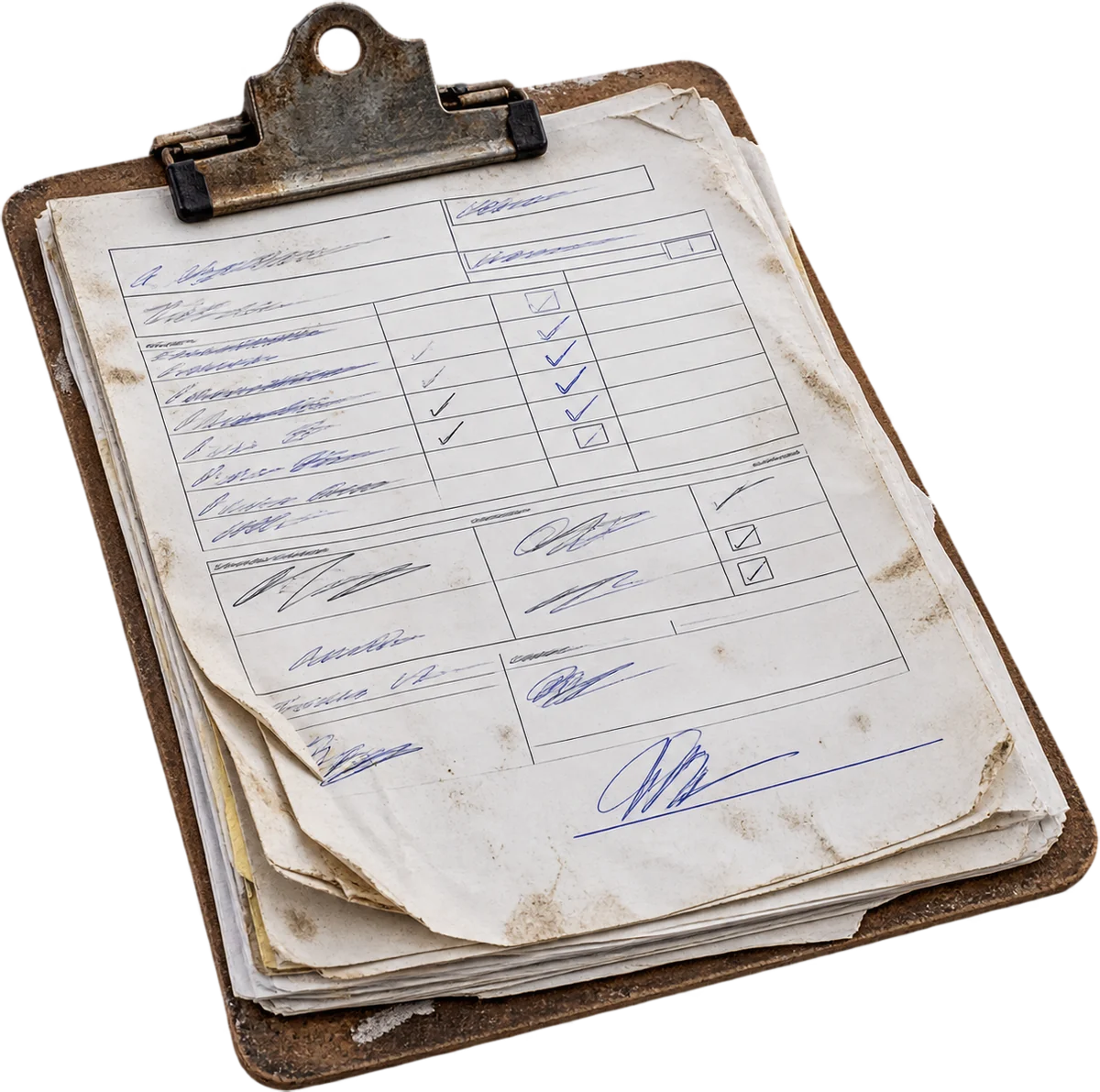

Today a purchase is approved on WhatsApp, by email and on paper
This is the path a request follows when approval rules are not written down. Mark the situations that happen in your company.
What staying this way costs
Purchases outside the budget
They surface at month-end close, after they have been paid.
Materials that arrive late
The order goes out whenever someone tracks down the approver, while the warehouse or the site waits.
Payments with no approval trail
In an audit there is no record of who approved, when, or for what amount.
How Diego organizes your approvals with the DMG-RT method
DMG-RT is Diego's own method: every change to the system answers to a business indicator measured before implementation. In this service the indicator is the time between the purchase request and the approved order.
Diagnosis: we follow a real purchase
Diego interviews whoever requests, buys and approves, and reviews the last 12 months of orders. He measures how many days pass between the request and the approved order.
Deliverable: Findings letter and approval-time baseline, in 15 business days.
Design: we write the approval matrix
With your team we define who approves what, by expense type, cost center and amount, which document each step requires and how long each signature may take.
Deliverable: Approval matrix, target process and a baseline signed off by finance.
Implementation and control: the rules go into the system
Diego configures the matrix in the system you already use or in Odoo, and trains on three levels: operate, understand and manage. Every two weeks the indicator is reviewed with the process owner.
Deliverable: Rules in operation and an approval-time dashboard.
Handover: your team runs it without Diego
An indicator owner is named, with a deputy, along with a manual per role and reviews at 3, 6 and 12 months using the same baseline measurement.
Deliverable: Closing record and operating manual.

Your team approves from the order, with a reminder and a deadline
The usual objection is that the team will not change its habits. Habits change when approving in the system takes fewer steps than approving on WhatsApp: the approver opens the activity, checks the order and clicks Approve Order. The buyer sees the status of the request without asking.


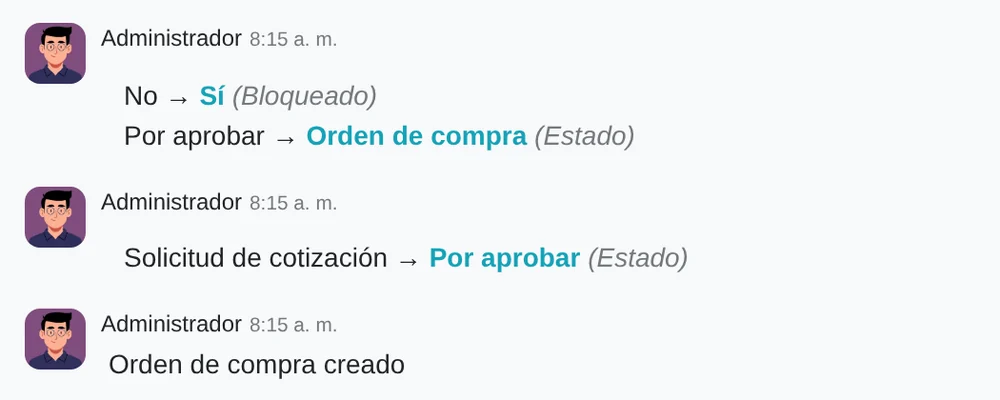
Standard Odoo 20 demo instance, fictitious data.
Review with Diego how a purchase is approved in your company today.
Book a 30-min diagnosisWhat you provide and what you receive
You provide
- Purchase orders and vendor bills for the last 12 months, in a spreadsheet or exported from your system.
- The current authorization limits, even if they only live in an email.
- One key user from purchasing and one from finance, with time set aside in their schedule.
You receive
- Approval matrix by expense type, cost center and amount.
- Rules configured in your system, with reminders and deadlines per approver.
- Approval-time dashboard and a manual per role.
When this service is not a fit
If a single person buys and approves everything, there is nobody to route the signature to. In that case it is better to start by recording purchases in one system, with the ERP with Odoo service. See ERP with Odoo
Systems involved in an approval
- Workflow (BPM)Approval routes by amount, department and request type.
- E-procurementRequest, quote, comparison and order in a single record.
- Expense managementExpense reports and refunds with an approver and a receipt.
- Document managementQuotes, contracts and acceptance records next to the order.
- Digital signatureContracts and records signed online, with a log of each signature.

Diego writes the rules with your team, then configures the system
Diego Muñoz works on site with whoever requests, buys and approves. The matrix comes from those conversations and from real orders, not from a template.
He configures the rule in the system you already have when that is enough, and in Odoo when a single record for purchasing, inventory and accounting makes sense. Code and credentials stay in your company's name.
- Odoo 17, 18, 19 and 20
- Peruvian localization: SUNAT and PLE
- Enterprise architecture with TOGAF
Questions about purchase approvals
Do I need Odoo to organize my approvals?
No. The approval matrix is written first and configured in the system you already use if it supports levels and reminders. Odoo is recommended when purchasing, inventory and accounting also need to share a single record.
What happens if the approver is traveling?
The activity reaches the phone and the order can be approved from the mobile app. The matrix also names a deputy per level, so the order never waits on a single person.
How long does it take?
The F1 diagnosis takes 15 business days. Design usually takes 2 to 6 weeks and implementation moves in 2-week cycles; the exact timeline comes from the findings letter.
How is it paid?
A fixed fee per phase, paid when each milestone is delivered. You decide at the end of each phase whether to continue.
What data do I need to share?
Purchase orders and vendor bills for the last year, the current authorization limits and the department org chart. Read-only access is enough; no permission to change your system is requested.
Review one of your company's purchases with Diego in 30 minutes
- You explain how a purchase is approved today.
- Diego points out where it stalls and which rule is missing.
- You receive the next step in writing, with or without Odoo.