- Home
- Systems
- Supply chain
- WMS
Every product in its location and every order checked before it ships
A WMS (warehouse management system) records receiving, put-away, picking, packing and shipping with barcode scanners. Diego analyses it with you and implements it with Odoo when your operation justifies it.
35 questions · result by dimension · free

A warehouse the system knows location by location
An ERP's inventory module knows how much stock there is. A WMS also knows where each unit is, who moved it and which order is waiting for it, and guides the operator step by step with a scanner.
Without that layer, operators find products from memory and order errors surface at shipping, when the truck is already waiting.
- 01Receiving
- 02Put-away
- 03Picking
- 04Packing
- 05Shipping
- 06Cycle count
Processes it covers
Indicators that call for a WMS
Most of these signs share one cause: the system records quantities per warehouse, not per location.
- Operators search for products because locations are not in the system
- Shipments leave with the wrong products or quantities
- The annual stock count stops the warehouse for several days
- Transfers between warehouses are coordinated by phone
- Nobody knows which orders are being picked, packed or ready
- Lots and expiry dates are tracked outside the system
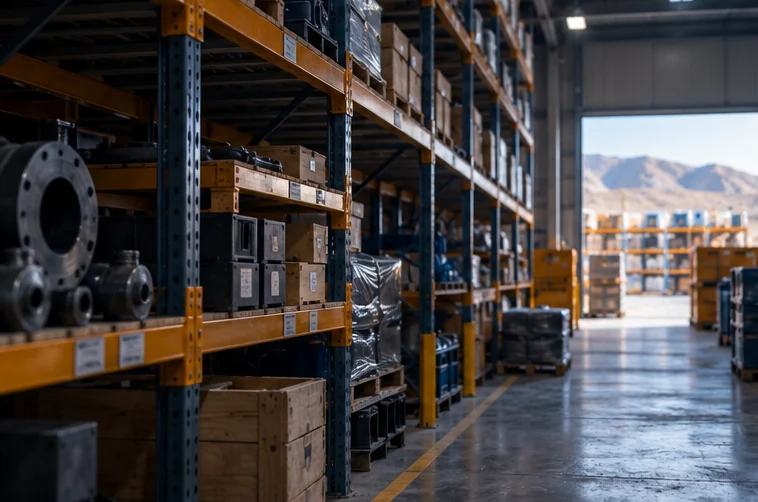
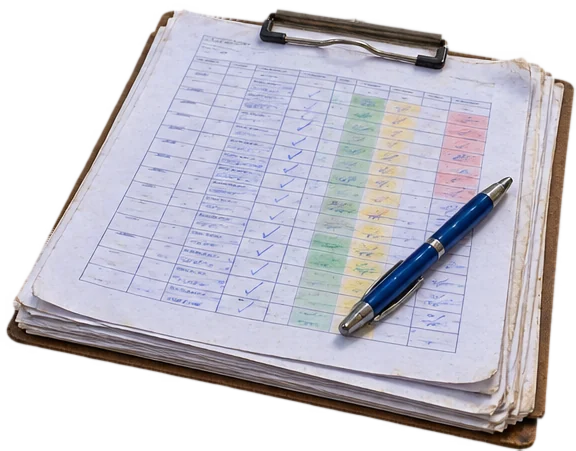
Company profile for a WMS, and when it is not a fit
Good fit
- Warehouses with several aisles or levels, where locations can no longer be remembered
- Operations with lots, serial numbers or expiry dates: pharma, food, spare parts
- Distributors picking multi-line orders every day
- Companies already on Odoo that track stock only per warehouse
Poor fit
- A small warehouse with few products and one person in charge: the ERP inventory module is enough
- Automated warehouses with stacker cranes or sorters: they need a specialised WMS with equipment control
- Logistics providers billing storage to many clients: a multi-client WMS fits better
Losses from product searches and corrected shipments
Search time
The time an operator spends walking to find a product shows up in no report, yet it caps how many orders leave per shift.
Errors that reach the customer
A wrong product means a return, a new shipment and a credit note, and the delivery note already issued is called into question.
Stock that does not match
With gaps between system and physical stock, purchasing reorders what is already there and sales promises what is missing.
WMS analysis method
The assessment walks the warehouse in the order goods move: receiving, put-away, picking, packing, shipping and counting. Odoo is configured after you approve the location map.
Online assessment
35 questions on receiving, locations, picking and counts. The result shows which warehouse dimension is furthest from location-level records.
30-minute review
Diego reviews the result with you and asks for two things: the warehouse layout and an order that shipped with an error. From that he proposes whether to start with receiving or with picking.
Warehouse visit and workshop
A walk through the warehouse and half a day with the warehouse manager and operators: location codes, one-, two- or three-step routes, replenishment rules and cycle counting.
Phased implementation
Go-live by zone or by flow in Odoo Inventory and Barcode, in two-week cycles, with inventory accuracy by location measured before and after.
Dimensions of the WMS assessment
Receiving and picking
Example: When goods arrive from a supplier, how is the quantity received checked against the quantity expected?
Locations and codes
Example: Are warehouse locations coded and recorded in the system?
System coverage
Example: Where are internal movements (relocations, replenishments, shrinkage) recorded?
Integration with sales and invoicing
Example: When sales confirms an order, how does it reach the warehouse?
Warehouse KPIs
Example: How do you measure inventory accuracy?
Team and training
Example: If the warehouse manager or the most senior operator is away, what happens?
Control and traceability
Example: Who can adjust stock in the system?
Your company's inputs to a WMS project
Data
- Product master with unit of measure, weight and barcode
- Warehouse layout with aisles, racks and levels
- Current stock per product and, if any, lots and expiry dates
People
- Warehouse manager with time for the workshop and tests
- Two or three operators per shift as key users
Access and documents
- Odoo or current ERP database with an administrator user
- Wireless coverage in the aisles and scanners or phones for the test
Diego's services in a WMS project
Warehouse survey
We walk receiving, aisles and shipping, follow one order through the flow and code the locations with you.
Deliverable: coded location map and current and target flow
Odoo Inventory configuration
We configure warehouses, locations, receipt and delivery routes, replenishment rules and removal strategies with your products.
Deliverable: routes and rules tested with your real orders
Barcodes and labels
We define what gets a label (location, product, lot or package) and configure scanners and label templates.
Deliverable: labels printed and scanning checked on the floor
Initial count and go-live
We plan the initial count by location, train by role and support the first weeks of operation.
Deliverable: initial stock by location and measured accuracy
Platforms we compare for a WMS
Odoo
Odoo Inventory with multi-step routes (pick, pack, ship), locations and Barcode. It is the platform Diego implements with.
Other recognised platforms
- Manhattan Active WMS
- Blue Yonder WMS
- SAP Extended Warehouse Management
- Oracle WMS Cloud
- Körber WMS
- Infor WMS
Comparison criteria
- Multi-step routes and FIFO or FEFO removal strategies, tested with your products
- Scanners, label printers and wireless coverage each option requires
- Lots, serial numbers and expiry dates traceable to the customer
- Three-year warehouse cost: licences, implementation, equipment and support in Peru
The order of the list implies no preference. The choice of a WMS comes from a test with your locations, your SKUs and a real day of orders.
Systems a WMS exchanges data with
WMS assessment result in 35 questions
This self-assessment evaluates how your warehouse receives, stores, picks and dispatches goods. Questions examine records, scanner usage, exception handling and order-level performance measurement.
Scored dimensions
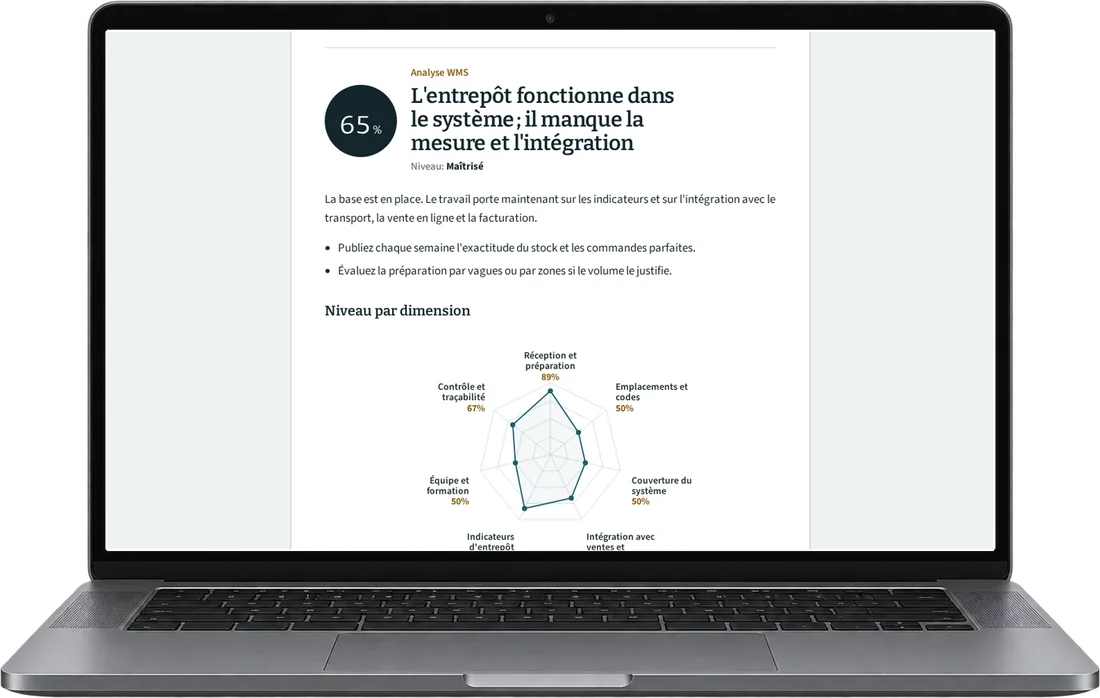
- Location-level inventory. Assesses whether every product and packaging unit has an identifiable location, a reliable balance and recorded movements.
- Picking and replenishment. Examines how receipts are verified, picking tasks are assigned and goods are replenished from reserve storage.
- Order to dispatch. Checks the continuity of a sales order through picking, packing, dispatch and shipping documentation.
- Accuracy and fulfilment. Checks the measurement of inventory discrepancies, picking errors and order fulfilment.
- Execution and traceability. Assesses operator autonomy, stock adjustment permissions and the identification of goods' origin and destination.
What you receive
After completion, you will receive an operational maturity level and a breakdown of gaps in locations, picking, dispatch, indicators and traceability. Each dimension will include an initial action to review WMS configuration or define missing controls.
18 scored questions and 12 context questions (type of operation, size, current system). Context questions are not scored: they let us read the result against similar operations.
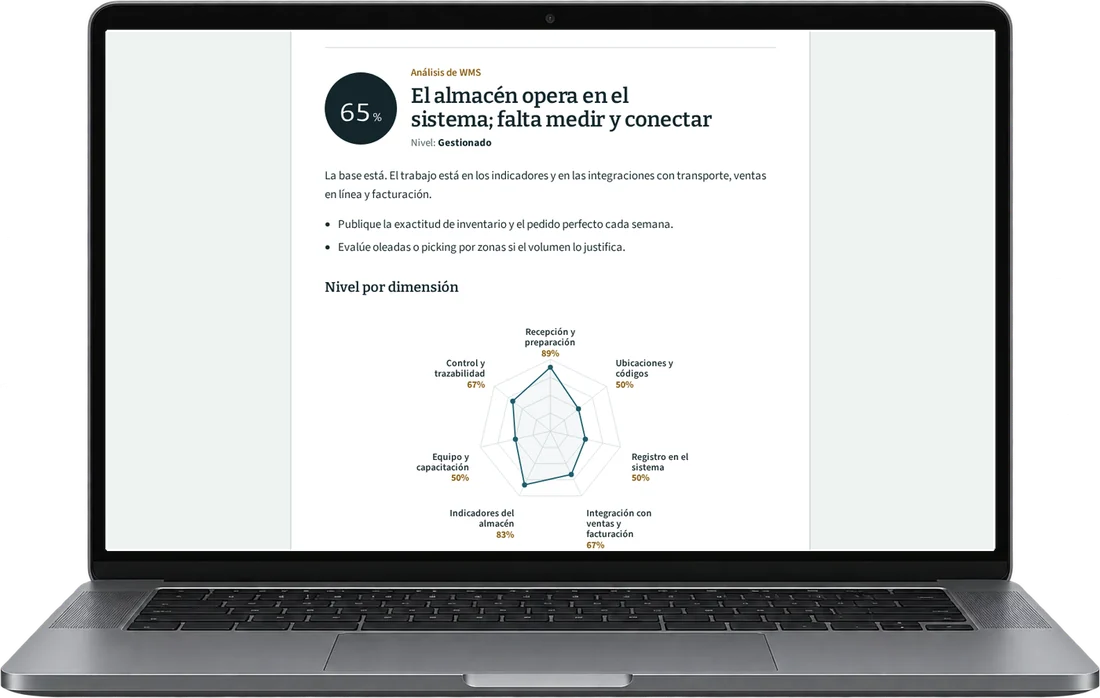
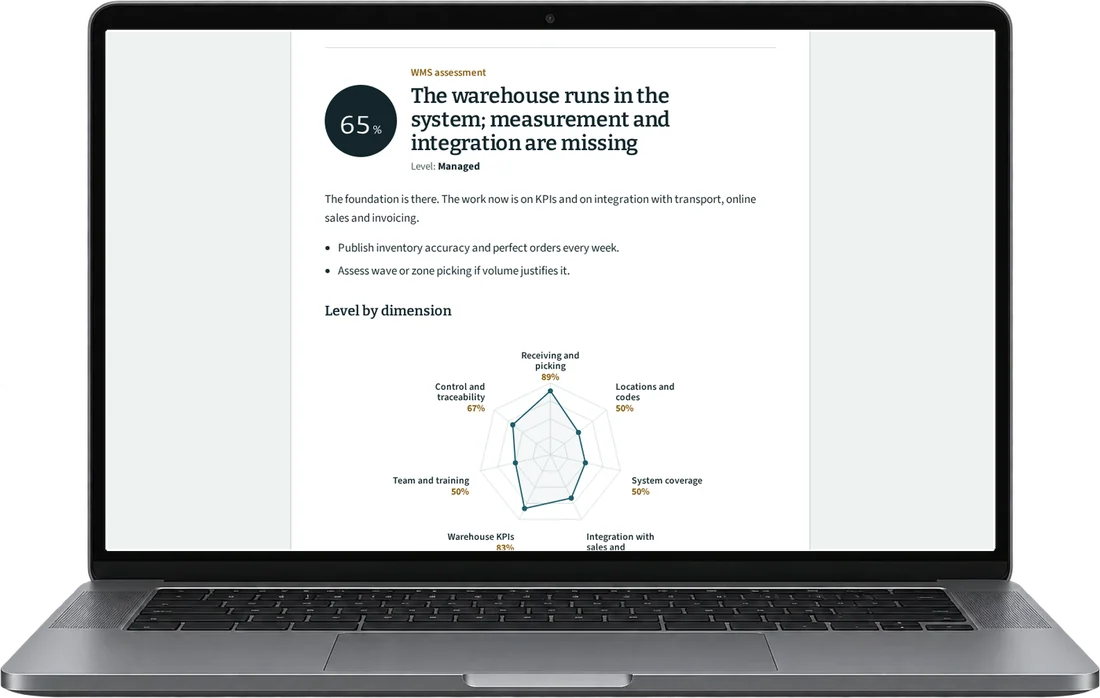
Common questions about a WMS project
Odoo Inventory with Barcode covers locations, multi-step routes, lots, serial numbers and cycle counts. For operations with warehouse automation or hundreds of operators per shift, we compare with specialised WMS before deciding.
Scanners or phones with a scanner, a label printer and wireless coverage in the aisles. We check them during the warehouse visit, before the proposal.
We start with one zone or one flow, for example receiving, and extend it once the team masters it. The initial count by location is planned outside peak season.
The online WMS assessment and the 30-minute review are free. If a workshop or a project makes sense afterwards, you get a proposal with scope and deliverables before deciding.
Only Diego Muñoz sees your answers on locations, receiving, replenishment and counts, to prepare the review. They are not shared with third parties or used for bulk mailings.
A 30-minute WMS review with Diego
Take the assessment and book the review with your warehouse layout at hand. Diego Muñoz replies in person, on Lima time.
WhatsApp +51 919 488 260 · damunoz@dmunozgroup.com