Service orders assigned, closed and invoiced on the same day
I write your field service requirements from a real working day and help you choose the platform.
37questions, 8 minutes and your level across five dimensions at the end

Signs your field service needs FSM
- Orders are assigned by phone or WhatsApp
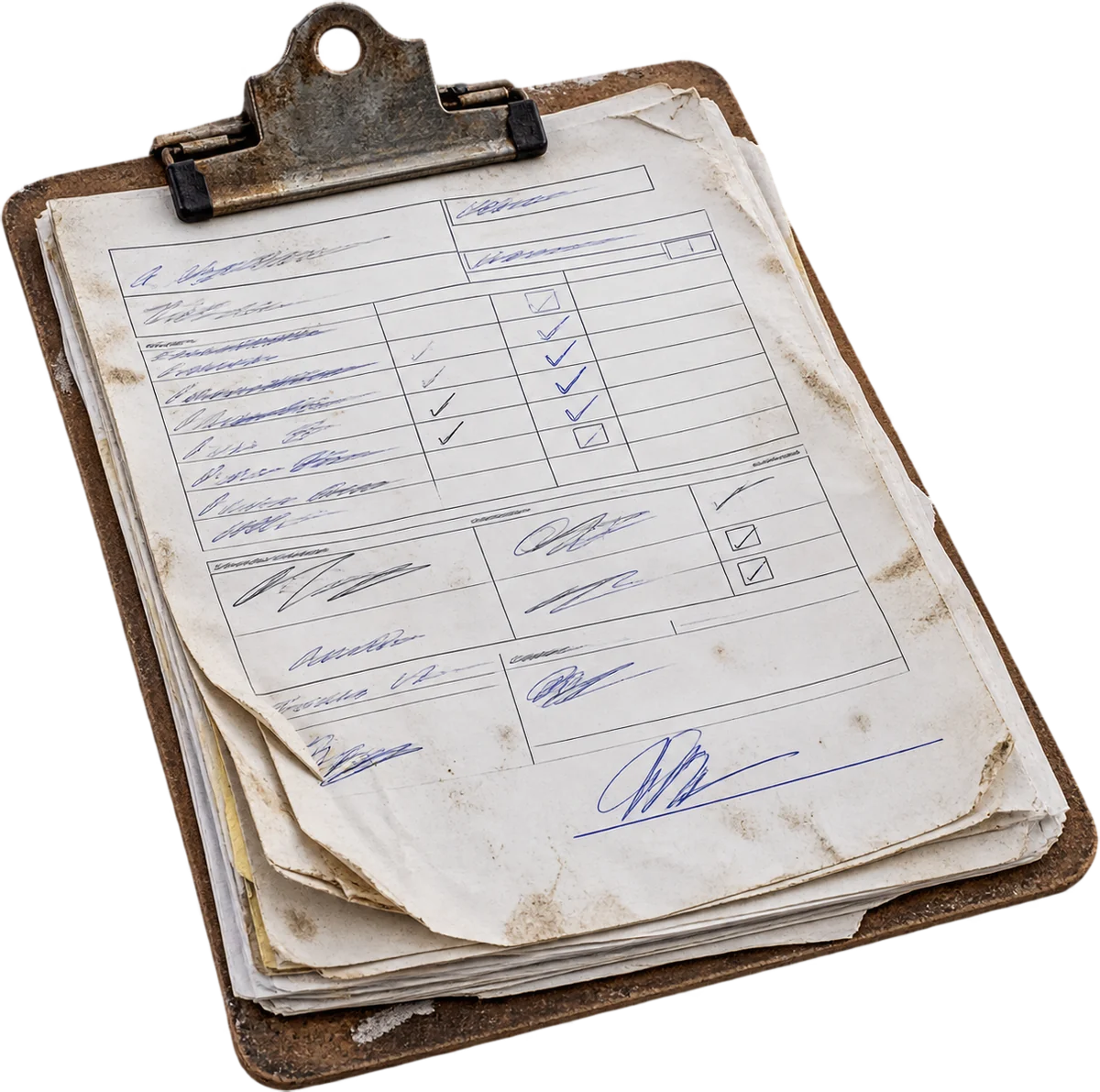
- Service reports are filled in on paper
- The invoice goes out days after the order closes
- Nobody knows which order each technician is on
- Parts used in the field are not deducted from stock
- Contracts with SLAs are not tracked
- Customers complain about missed visits
The cost of dispatching technicians by phone
Cash on hold
Every day between closing the order and invoicing is service delivered that has not been billed.
Repeat visits
A technician who arrives without the equipment history or the part comes back another day, and the trip is paid twice.
Contracts at risk
Preventive visits nobody schedules and SLAs nobody measures reach renewal time as complaints.
FSM: who it serves and when it does not fit
Who it serves
- Installation, contract maintenance or warranty companies whose technicians go out every day
- Dispatchers who assign visits by area and need to see where each order stands
- Finance teams waiting for the service report to invoice
- Operations in areas with no signal: mines, wells, highways and provinces
When it does not fit
- If maintenance is on your own assets and there is no customer to bill: an EAM or CMMS fits better.
- If the service is delivered at your workshop or premises, with no travel: a repair or helpdesk module is enough.
- If there are few technicians on a fixed schedule: a shared calendar and a report template may be enough.
How I assess FSM in four steps
The assessment comes from a real day with your dispatcher and a technician. The deliverables are the request-to-invoice walkthrough, the cleaned base data, the requirements list and the decision matrix.

I shadow a working day
From customer request to invoice: who assigns, how the technician gets there, what they report and when it is billed.
I organise the base data
Installed base by customer, service and parts catalogue, and written assignment rules.
I write the requirements
What the technician needs on the phone, the dispatcher on the board and finance at closing, including offline work.
I choose the platform with you
Demos with your own cases, a decision matrix and requirements for the link to your invoicing and inventory.
Inputs from your field operation
With this data each vendor demo runs on your orders and your equipment, not sample data.


- Data
- Service orders or reports from recent months, as scanned paper, spreadsheet or the current system.
- Master data
- Installed base per customer (equipment, serial, address), service and parts catalogue, and contracts with SLAs.
- Access
- Read access to the ERP for invoicing and inventory, and the list of technicians’ phones and data plans.
- People
- The dispatcher, an experienced technician and someone from invoicing for the field day and the demos.
Requirements and selection of your FSM platform
I help you choose the platform; the vendor implements it
Field service assessment
Current journey from request to invoice, with timings and the points where information is lost.
Requirements and selection
Prioritised requirements, a demo script and a decision matrix across options.
Integration requirements
Which data flows from the closed order to the invoice and from parts to inventory, for the chosen vendor to connect.
Diego Muñoz. I do not implement field service platforms. I assess your process, write the requirements and help you choose between options such as Odoo Field Service, Salesforce Field Service or Dynamics 365 Field Service. The chosen vendor implements it and connects it to your invoicing and inventory; I hand over the requirements for that integration.

Field service platforms
The options differ mainly in the technician app, offline work and automatic scheduling by area. The list is in no order of preference.
Odoo Field Service
Odoo has a Field Service app with on-site tasks, timesheets, signature and invoicing. I assess it with the same criteria as the other options; I do not offer to implement it.
Other field service platforms I assess
- Salesforce Field Service
- ServiceTitan
- IFS Field Service Management
- Microsoft Dynamics 365 Field Service
- Oracle Field Service
- Zuper
Limits of the FSM service
- I do not implement the FSM platform: the chosen vendor configures it.
- I do not build algorithmic route optimisation; I assess how well each platform does it with your areas.
- I do not build the ERP integration: I specify which data flows from the order to the invoice and inventory, and the vendor builds it.
Criteria for choosing the FSM platform
- Mobile app that works offline
- Scheduling by area, skill and availability
- Installed base and contracts with preventive visits
- Invoice from the order and parts deducted from inventory
- Cost per technician and ease of use for your team

Field service integrations

Help desk and customer support
A customer complaint becomes a service order without retyping.
See the systemEnterprise asset management / maintenance management
They share equipment history when the work is on your own assets.
See the systemEnterprise resource planning
The closed order generates the invoice and parts leave inventory.
See the systemWarehouse management system
Each van’s stock is managed as a warehouse location.
See the systemGeographic information system
Customer addresses are mapped to group visits by area.
See the systemWorkforce management and time attendance
Technician shifts and attendance feed schedule availability.
See the system37 questions on your field service, in 8 minutes
This self-assessment evaluates how your operation schedules, executes, documents and closes field work orders. The questions examine observable practices involving shifts, crews, assets, spare parts, SLAs, customer acceptance and billing.
Scored dimensions
- Dispatch and scheduling. Assesses how service orders are assigned, scheduled and rescheduled according to shifts, location, technical qualifications and equipment availability.
- Field reporting and traceability. Checks whether each intervention records the serviced asset, hour-meter reading, work performed, crew hours and completion evidence.
- Spare parts and field logistics. Evaluates identification, availability, reservation and consumption of spare parts used by crews at operating sites and camp warehouses.
- SLAs and contractual obligations. Examines how response deadlines, committed visits, work permits and acceptance requirements are controlled for each contractor agreement.
- Closure, billing and performance. Determines whether completed work orders become accepted and billable services, with tracking of productivity, repeat visits and closure times.
What you receive
Upon completion, you will receive a result by assessment dimension, identified gaps and initial actions for reviewing your process. The analysis supports requirements preparation and comparison of options such as Odoo Field Service, Salesforce Field Service and Dynamics 365 Field Service; implementation and integrations are handled by the selected provider.
18 scored questions and 14 context questions (type of operation, size, current system). Context questions are not scored: they let us read the result against similar operations.
Free of charge. Only Diego Muñoz sees your answers.
Field service FAQ

No. I do the assessment, the requirements and the selection. The chosen vendor implements the platform and connects it to your ERP, using the integration requirements I hand over.
Yes. Offline work is a requirement I filter on from the start: the app stores the order, photos and signature, and syncs when the signal returns.
The list of equipment by customer, a cleaned service and parts catalogue, and the rules used today to assign technicians. The online assessment shows which of the three lags most.
The online assessment and the 30-minute review with me are free and carry no commitment.
Only I, Diego Muñoz, read them, to prepare the review. I do not share them with third parties or use them for bulk mailings.
Review your field service with Diego
Twenty minutes with a recent service order, from the customer call to the invoice. I reply in person, on Lima time.
WhatsApp +51 919 488 260 · damunoz@dmunozgroup.com