Always build the approved version of the design
A PLM controls versions of drawings, formulas and bills of materials, and approved engineering changes. We analyse your change flow and help you choose.
36 questions: engineering changes (ECR/ECO), revisions and documents and 4 more topics
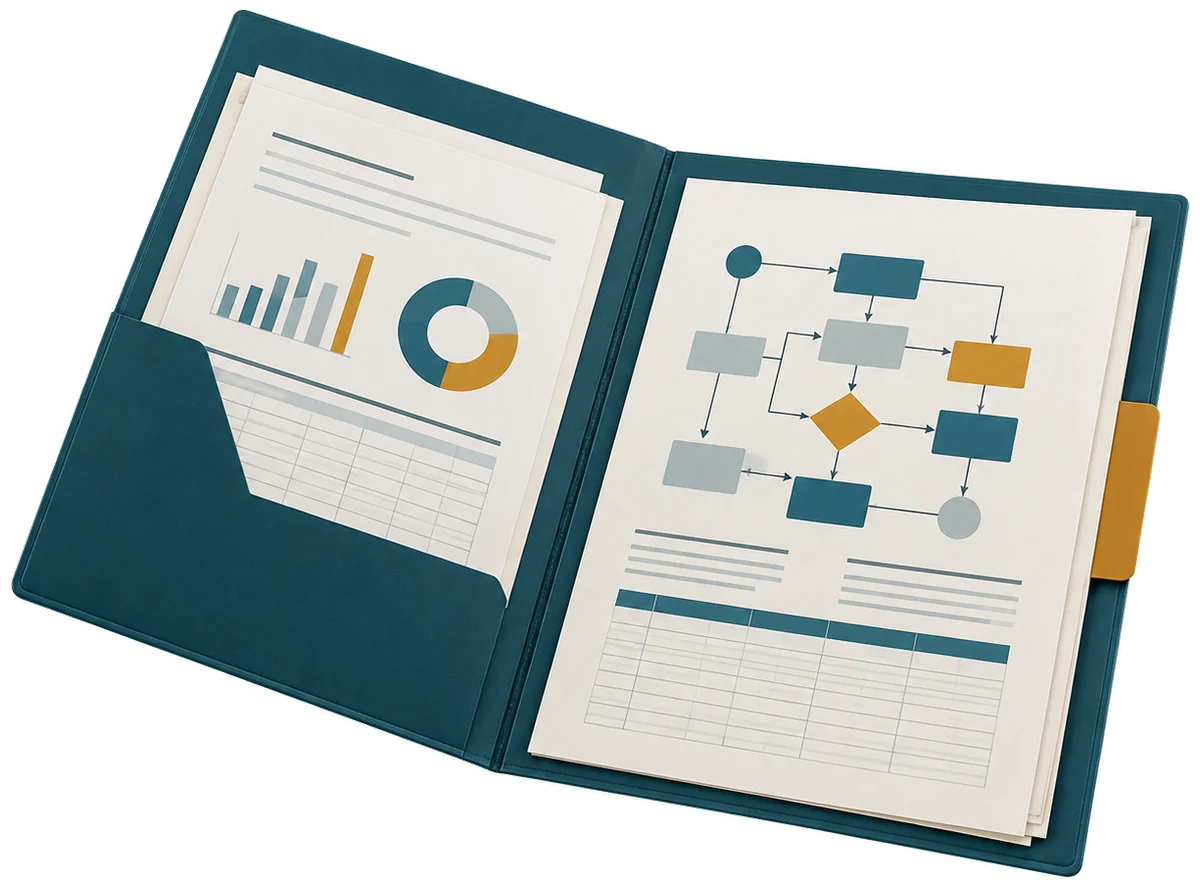
Versions and engineering changes under control
Product lifecycle management (PLM) keeps the current version of every design, drawing or formula, and manages engineering change orders with approval and effective dates.
Its approved bill of materials flows to the ERP so production and purchasing work from the same version.
Processes it covers
- Product development
- Engineering change orders
- Version management
- Engineering bill of materials
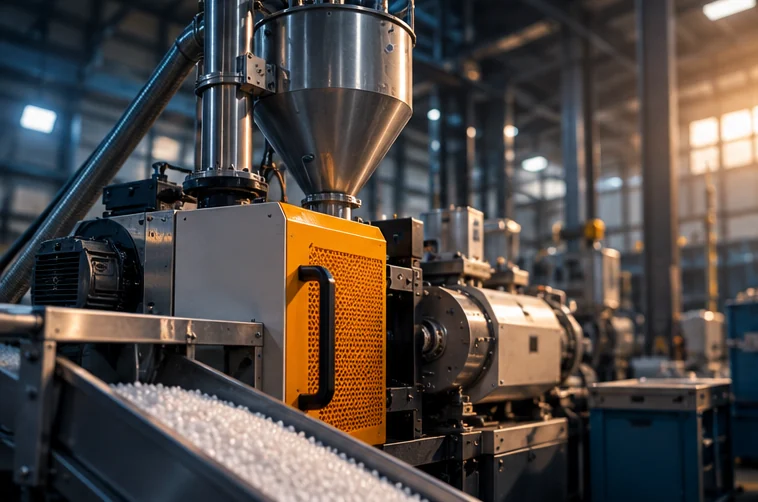
Companies that need a PLM system, and cases where another option fits better
Who it is for
- Companies that design their own products: metalworking, equipment, furniture, packaging, technical plastics
- Engineering offices where drawings and CAD models live in shared folders with hand-made names
- Plants that have at some point manufactured an older design version by mistake
When it is not the right fit
- If you make to order from customer designs with no own catalogue, project drawing control may be enough
- If bills of materials are not yet in the ERP, MRP comes first
Signs it is time to assess a PLM system
- Several versions of a drawing coexist and nobody knows which is current
- Engineering changes are communicated by email
- The engineering bill of materials differs from the production one
- New product development has no defined stages or approvals
- Customer specifications get lost between sales and engineering
- Costing cannot estimate a new product until it is made
The cost of building to the wrong drawing
Version errors
A part made to an earlier drawing is reworked or scrapped.
Half-applied changes
The change reaches production but not purchasing, or the reverse, and two versions coexist on the floor.
Slow launches
Without stages or approvals, each new product moves its own way and nobody knows where it stands.
From the change order to the right version on the floor
Online assessment
36 questions on engineering change management. When you finish you see your level by dimension.
30-minute review
Diego reviews with you how an engineering change starts, who approves it and how the new version reaches the warehouse and the floor.
Engineering workshop
With engineering, production and purchasing we review how a change is approved, where the current version lives and how the bill of materials reaches the ERP.
Selection and integration
We compare 2 to 4 options, from Odoo PLM to engineering platforms connected to your CAD, with three-year total cost.

Data, master records and access your company provides for a PLM system
- Current item coding and revision rule
- CAD tool and where models and drawings are stored today
- Engineering and manufacturing bills of materials for a representative product
- The latest engineering changes and how they were communicated
- Engineering, quality and production owners who approve changes
Deliverables of the PLM analysis, selection and integration
Engineering change flow
Request (ECR), change order (ECO), approvals, effective date and what happens to stock of the old version.
Change procedure
Product structure
Coding rule, revisions and the step from engineering BOM (EBOM) to manufacturing BOM (MBOM).
Item and revision model
Platform selection
Odoo PLM and PLMs with a CAD vault compared on your design tool, users and three-year cost.
Decision matrix
Release to the ERP
Which data goes to the ERP when a revision is approved: item, bill of materials, routing and shop-floor documents.
Integration map
Typical risks of a PLM project and how they are controlled
Smart coding that breaks
ControlMeaningless codes with separate attributes, agreed before migrating items.
Migrating every old revision
ControlThe current revision is migrated and history stays available in the old archive.
An approved change with no effect on the floor
ControlThe change order states what happens to stock and open orders in the ERP.
Scope limits and market options for PLM
Limits
- We do not implement the chosen PLM or administer the CAD tool
- Odoo PLM manages revisions and change orders; it does not replace a CAD vault integrated with the modeller
- If the decision is Odoo PLM inside an Odoo we implement, it joins that project
Selection criteria
- Integration with your CAD tools
- Change order workflow with approval
- Approved bill of materials flowing to the ERP
- Scale: engineering users and products per year
Odoo
Odoo PLM: engineering change orders and bill of materials versions, in the same database as manufacturing. We assess it as one more option.
Other platforms on the market
- Siemens Teamcenter
- PTC Windchill
- Dassault ENOVIA / 3DEXPERIENCE
- Autodesk Fusion Manage
- Arena PLM
In no order of preference.
Systems that exchange data with a PLM system
Material requirements planning
approved bills of materials
See the systemQMSQuality management system
specifications and checks per version
See the systemDMS/ECMDocument and enterprise content management
controlled drawings and documents
See the systemERPEnterprise resource planning
products, versions and costs
See the systemPIMProduct information management
technical product data for sales
See the systemPLM assessment in 9 minutes
This assessment measures how drawings, formulas, bills of materials and change orders are controlled from engineering to the plant. The questions describe observable situations, such as where the current revision is kept or how a change reaches the production order.
Scored dimensions
- Engineering change orders. Looks at how a change to a design, formula or bill of materials is requested, assessed, approved and made effective.
- Current revision of drawings and formulas. Looks at whether each drawing, CAD model or formula sheet has a single place of custody, a status and a current revision known to the plant.
- Engineering and production BOM. Looks at item and revision coding, and how the engineering bill of materials reaches the ERP production BOM and orders.
- Development stages and pilot. Looks at whether a new product moves through approved stages, goes through a pilot batch or first article, and has its launch time measured.
- Design cost and reuse. Looks at whether a product's cost is estimated per revision before the first batch and whether existing components are reused before coding a new one.
- Customer and regulatory specifications. Looks at whether customer specifications, technical data sheets, safety data sheets and sanitary registrations are linked to the product revision.
What you receive
When you finish you receive your level in six engineering control dimensions and the gaps ranked by priority. Each gap comes with a first action your team can verify.
19 scored questions and 12 context questions (type of operation, size, current system). Context questions are not scored: they let us read the result against similar operations.
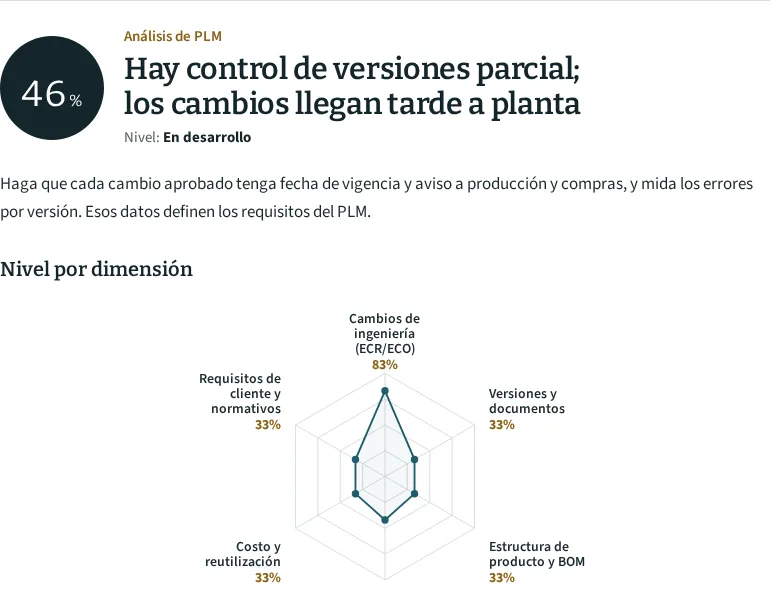
36 questions, 9 minutes
Example: if design changes are announced by email, the result flags Engineering changes (ECR/ECO) and proposes a change order approved by engineering, quality and production.
Answers about PLM
With few designers and no 3D CAD, ERP version control may be enough; with a large engineering team and CAD, a dedicated platform usually makes sense. The assessment shows which.
In food, chemicals or cosmetics, PLM manages formulas and specifications with the same version and approval logic.
A PLM with a CAD vault is implemented by its vendor. We design the change flow and product structure, run the selection and define how revisions are released to the ERP.
Review your PLM result with Diego
Twenty minutes by video call or WhatsApp. Have at hand a drawing with its revision history and the bill of materials of the same product.
Assessment first: the review uses your answers.