Controls that leave evidence in the system
We review risks, controls and permissions, and how your systems can enforce them, before proposing any GRC tool.
34 questions, result at the end, free of charge.

GRC system: definition and use
GRC stands for governance, risk and compliance. A GRC system documents risks, controls, audits and regulatory obligations, and proves that controls work.
Much of internal control lives in the ERP: permissions, approvals, lock dates and audit trail. A GRC platform organises the rest when volume calls for it.
Who it is for and when it does not fit
A good fit for
- Companies audited every year by an outside firm
- Regulated sectors: finance, health, mining, energy
- Boards asking for a risk matrix with owners
- Companies whose ERP users have more permissions than needed
Not a fit when
- Processes are not documented yet: work starts with processes and basic internal control
- The only need is the ERP audit trail: it is switched on without buying another system
- You seek a full ISO certification: that is for a consultant in that standard
Cost of rebuilding evidence for every audit
Searching emails for approvals and building samples by hand takes weeks at every audit. Work out the cost with your own figures.
Example: an internal auditor and an analyst at S/ 45 an hour. Replace the values with yours.
The estimate shows what the manual task costs today. It is not a savings promise.
Risks, controls and evidence
A GRC system records each risk with its owner, the controls that mitigate it, the periodic test of each control and the evidence behind it. Regulatory obligations carry a date and an owner.
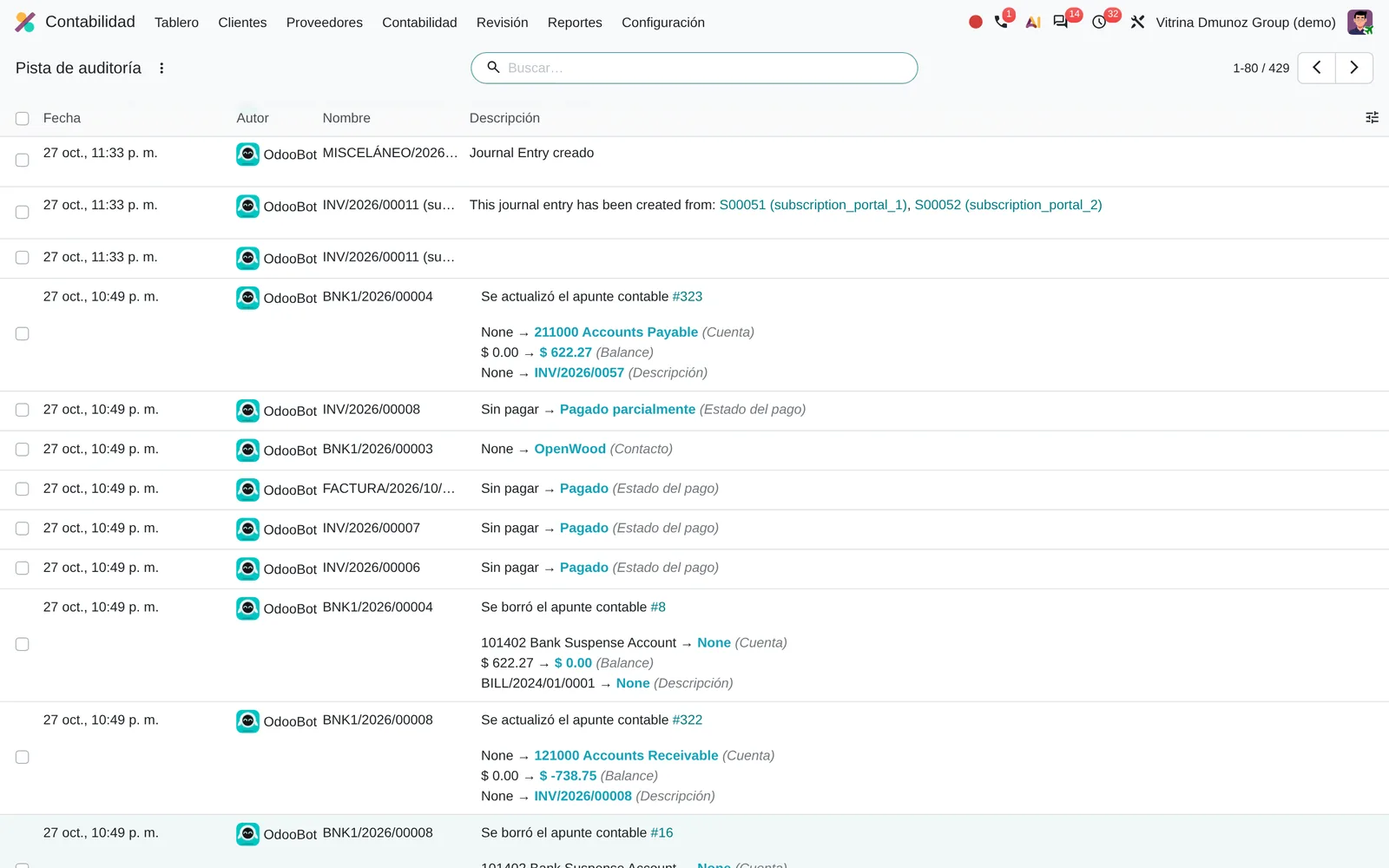
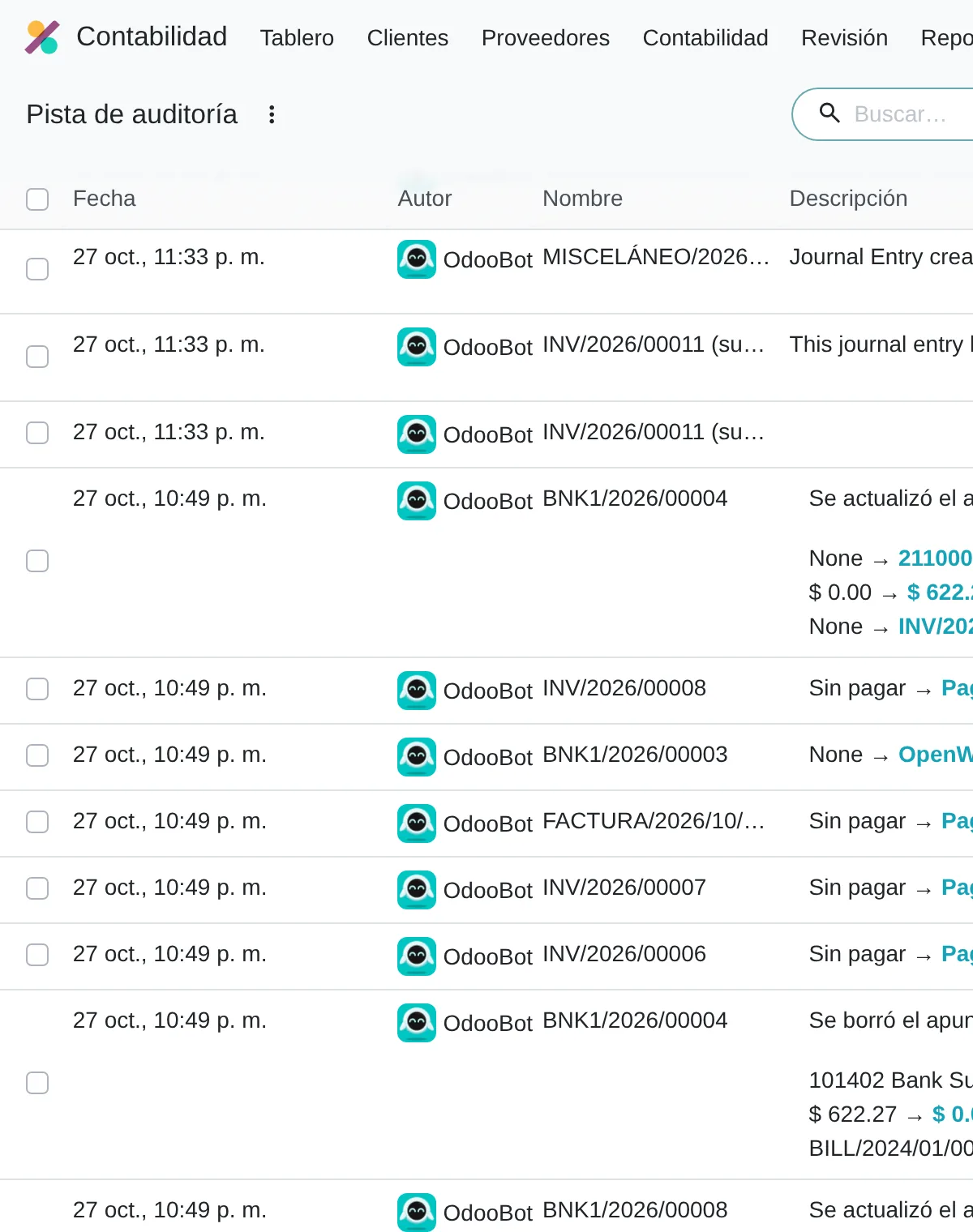
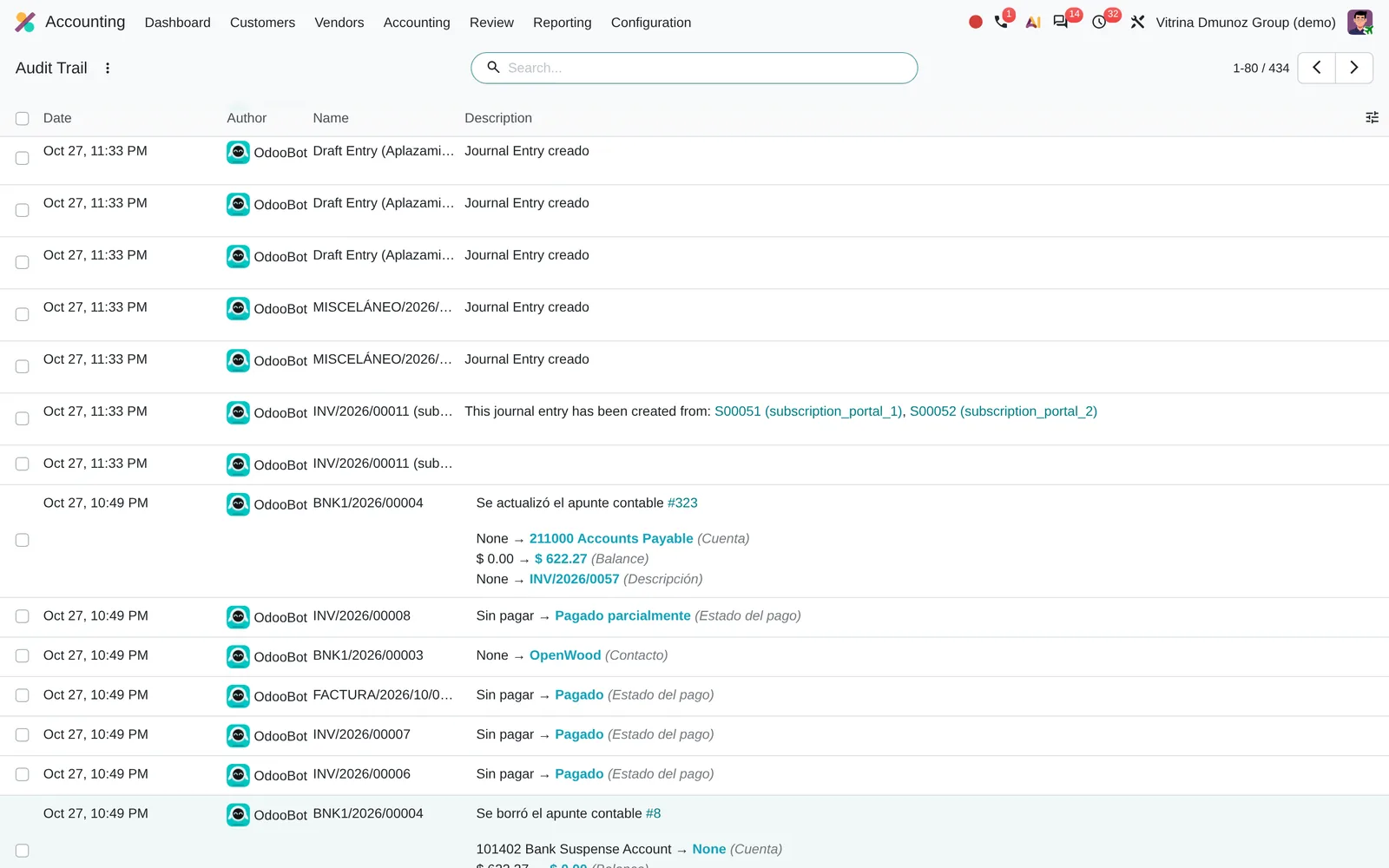
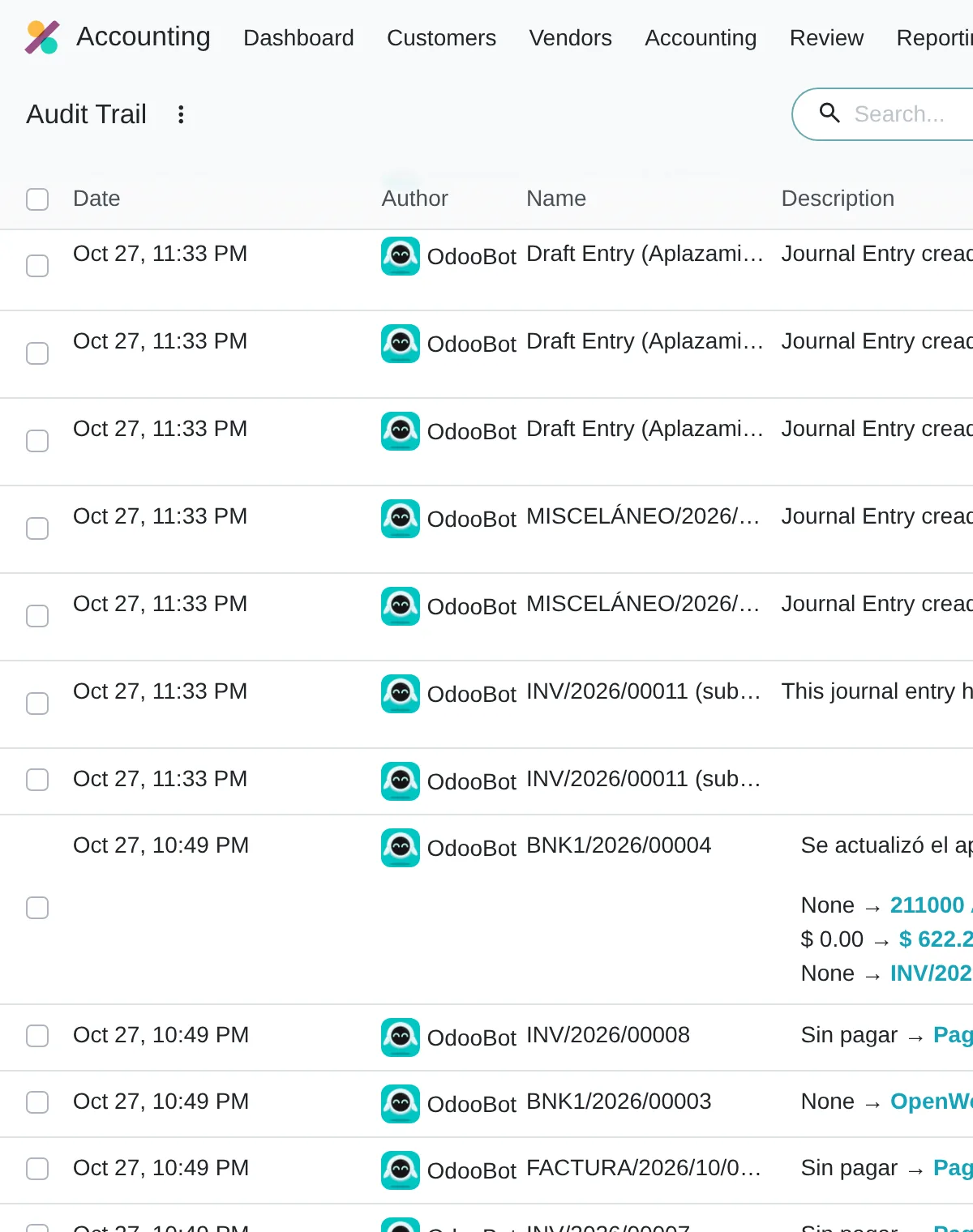
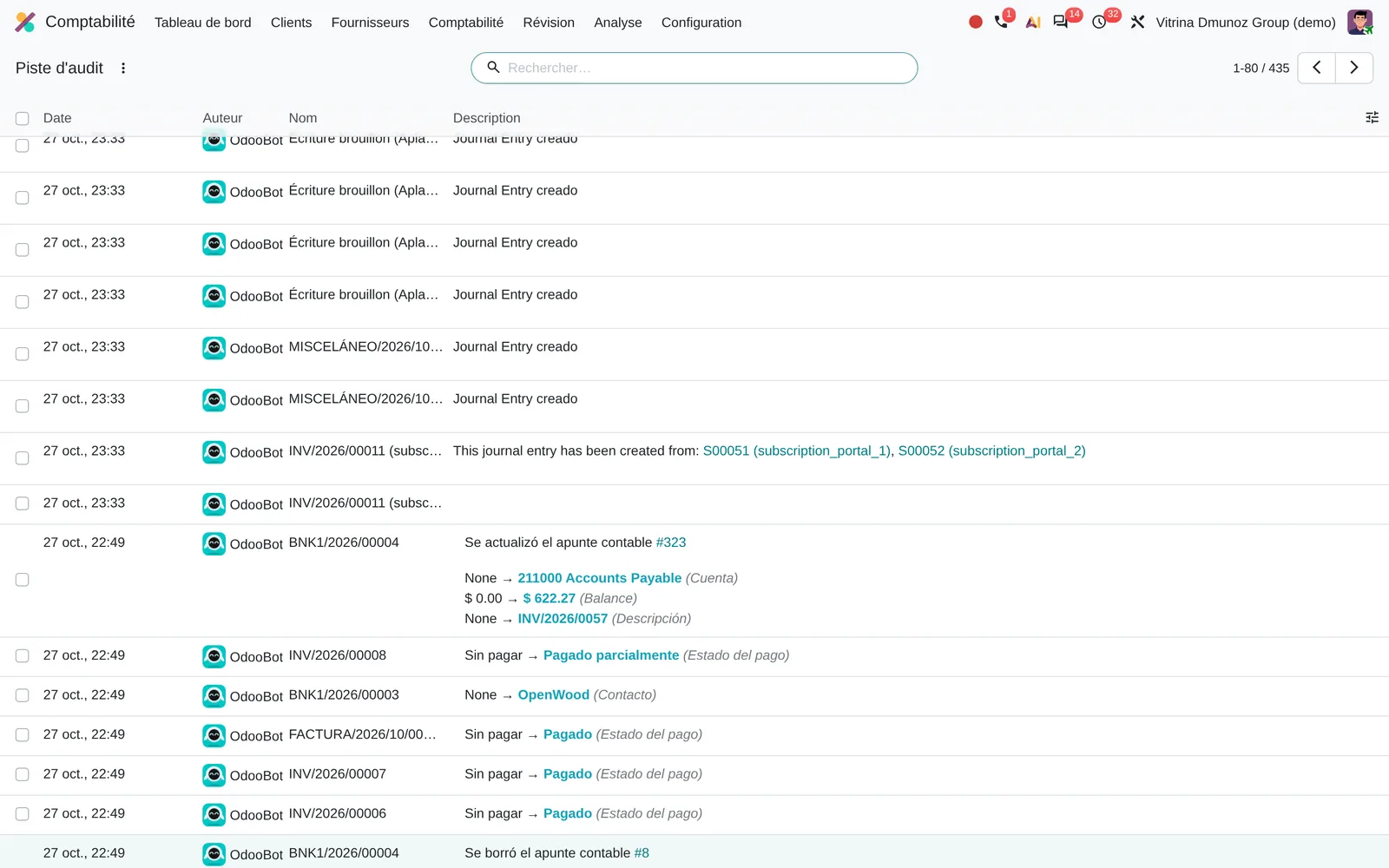
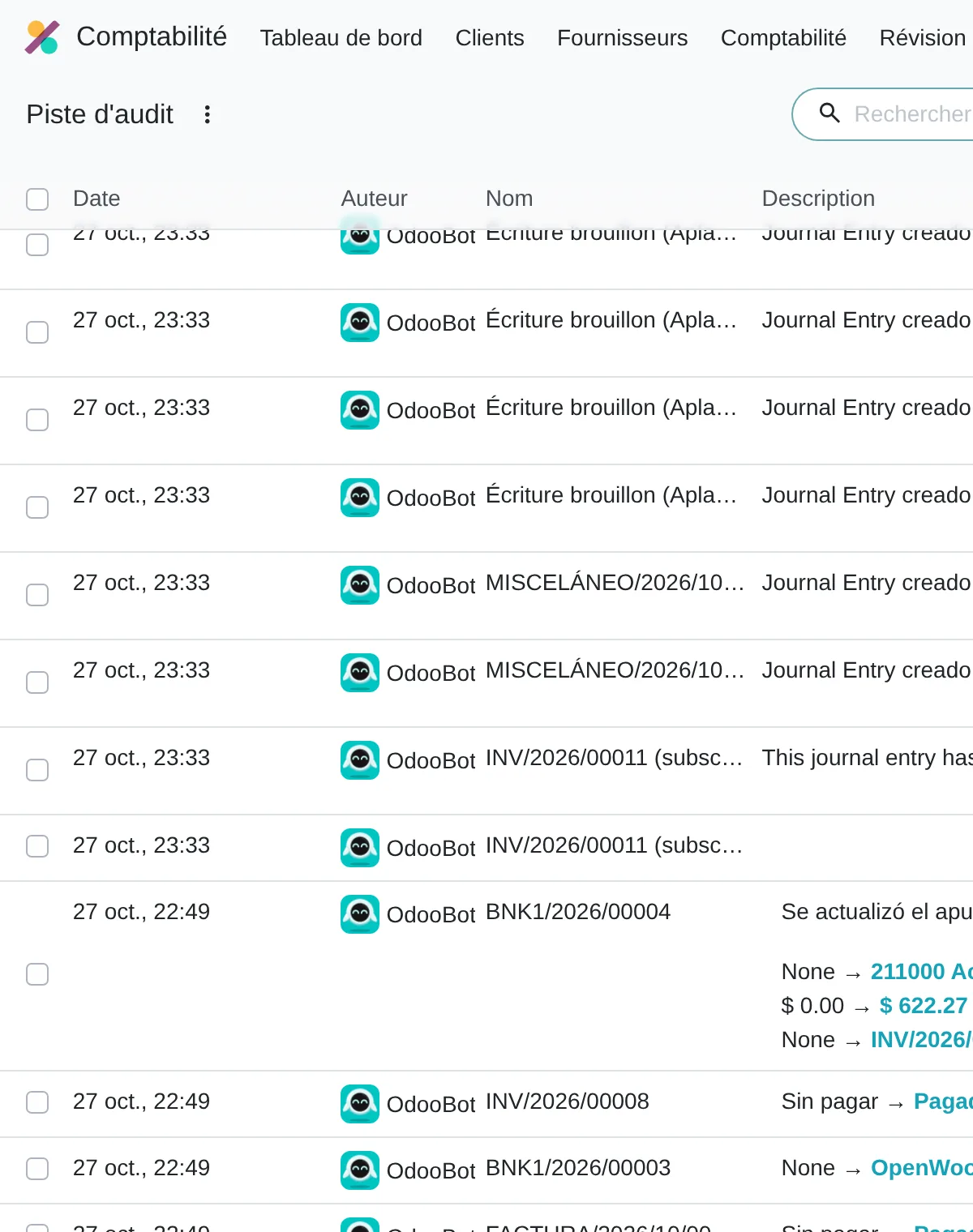
In the ERP, evidence is produced automatically: Odoo 20 keeps in the Audit Trail who changed each entry, when and the previous value. That trail is one of the GRC sources.
Control cycle
- Risk identified
- Control assigned
- Test with evidence
- Finding closed
The method applied to internal control and risk management
Diego Muñoz leads every assessment: process and data first, then the tool, in short phases you approve.
Risks and critical processes
With management we identify the risks that matter most and the processes where they occur: purchasing, payments, accounting, access.
Controls and evidence
We write the control matrix and check which ones the ERP already provides (permissions, approvals, locks) and which are missing.
Sample testing
We test a sample of controls against real records and note which evidence comes from the system.
Roadmap and tool
We propose what to adjust in the systems and whether a GRC platform makes sense. If one is chosen, its vendor implements it.
Deliverables
- Risk and control matrix with owners
- Segregation-of-duties matrix checked against real permissions
- Results of testing a sample of controls
- Roadmap of system adjustments and a decision on a GRC platform
Prerequisites and outputs
Prerequisites
- Process map with an owner per process
- List of applicable regulatory obligations
- Current roles and permissions in each system
- Findings from previous audits
Outputs: matrices, obligations calendar and evidence
- Risk and control matrix with owners
- Segregation-of-duties matrix by role
- Obligations calendar with owners
- Evidence of each control test ready for the auditor
Assessment dimensions
This analysis reviews the risk matrix, the control matrix and its evidence, tests and findings, access and segregation of duties, and regulatory and contractual obligations. The questions describe how internal control is documented and tested today, and how much of it the systems enforce.
What you receive
When you finish you receive a level per dimension of your internal control and the gaps ordered by priority. Each gap states whether it is solved with ERP permissions and configuration or with a procedure, and the first verifiable action.
17 scored questions and 12 context questions (type of operation, size, current system). Context questions are not scored: they let us read the result against similar operations.
Market options
We do not implement GRC platforms. We review which controls your ERP can enforce and, if a platform is needed, help you choose it.
ERP coverage
What the ERP covers: role-based permissions, approvals by amount, lock dates and audit trail. In Odoo this is configured without a separate tool.
Odoo 20 technical modules
accountapprovalsdocuments
Other options
GRC and internal audit platforms for risk matrices, control testing, findings and obligations, used mainly by large or regulated companies.
- ServiceNow GRC
- Archer (RSA)
- MetricStream
- AuditBoard
- SAP GRC
- Diligent HighBond
GRC platforms used by internal audit; in no order of preference.
Selection criteria
- Risk and control matrix the team maintains without a consultant
- Evidence linked to the ERP record
- Obligation reminders with owner and date
- Audit committee report without rebuilding it by hand
Limits of the standard product
GRC platform implementation
How it is handledWe do not do it: the vendor does, with our prior assessment
ERP audit trail not enabled
How it is handledIt is enabled in Settings; it records from then on, not backwards
Controls in systems with no change log
How it is handledThey are documented with dated manual evidence until migration
Peruvian localisation
- Law 30424 and crime-prevention model
- Personal data protection law 29733
- SBS or SMV rules for supervised companies
Assessment, selection and integration
Internal control assessment
Risks, control matrix, segregation of duties and sample testing.
Controls in the ERP
Role-based permissions, approvals, lock dates and audit trail in the ERP you already use.
GRC platform selection
Comparison of options against your controls and volume, if a platform is justified.
Vendor coordination
We support the chosen vendor’s implementation with the control matrix in hand.

I assess your internal control and how your systems enforce it: permissions, segregation of duties, audit trail and lock dates in the ERP. If you need a GRC platform, I help you choose it and coordinate with the vendor; I do not implement it.
Systems that connect with internal control and risk management
GRC draws evidence from accounting and the books, access data from the user directory and documents from the document manager. The links lead to each system’s assessment.
Before you start

Many mid-sized companies do not. A well-built matrix and controls configured in the ERP cover the essentials. The assessment shows when a platform is justified.
We do not issue audit opinions. We review control design and how systems enforce it, so you reach the audit in order.
No. We help you choose it and coordinate with the vendor. What we do configure are the controls inside Odoo.
The online assessment and the 30-minute review are free. Later work is quoted by phase.
Only Diego Muñoz, to prepare the review. They are not shared with third parties.
Start with the online assessment
At the end you see your level and where to start. If you like, we review it in a 30-minute video call with Diego Muñoz.
WhatsApp +51 919 488 260 · damunoz@dmunozgroup.com