Machine data in context for maintenance and energy decisions
IIoT and historians capture and store sensor and machine data. We define the business question first and the platform second.
34 questions: use case and decision, capture and connectivity and 4 more topics
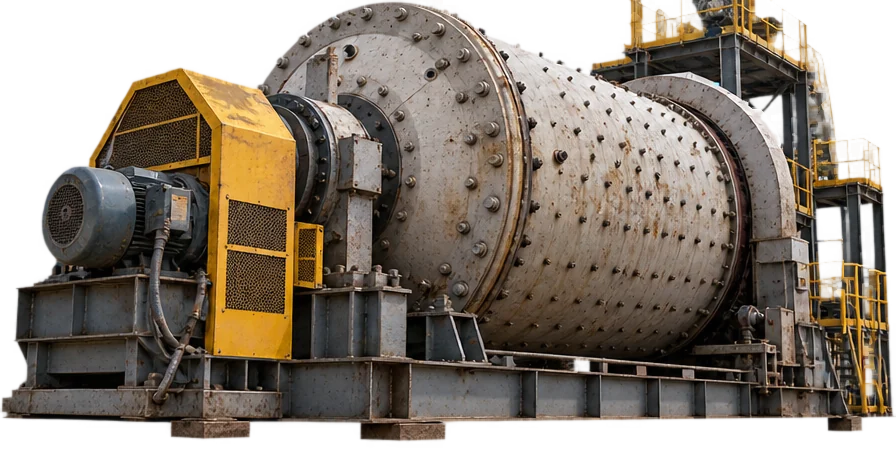
Plant time series, stored and in context
Industrial IoT (IIoT) connects sensors and machines to a network; the historian stores those readings as time series to analyse downtime, energy use, equipment condition and quality.
The value appears when each reading carries its order, shift and lot, and when an event triggers an action.
Processes it covers
- Machine data capture
- Condition monitoring
- Energy management
- Process analysis

Companies that need an IIoT platform, and cases where another option fits better
Who it is for
- Plants with PLCs or sensors that already produce data but keep it for a few days or on the device
- Maintenance teams moving from calendar to equipment condition: vibration, temperature, running hours
- Management paying for energy, water or steam without knowing which line or product consumes it
When it is not the right fit
- If there is no concrete business question: storing data from every sensor with no defined use only adds cost
- If what is missing is production recording per order, the right system is an MES
Signs it is time to assess an IIoT platform
- Nobody can say how long a machine was stopped last week
- Energy or water use per unit produced is unknown
- Maintenance replaces parts by calendar rather than by condition
- Installed sensors only show the current value at the machine
- Quality cannot link a defect to the process conditions at the time
- Every sensor project uses a different platform
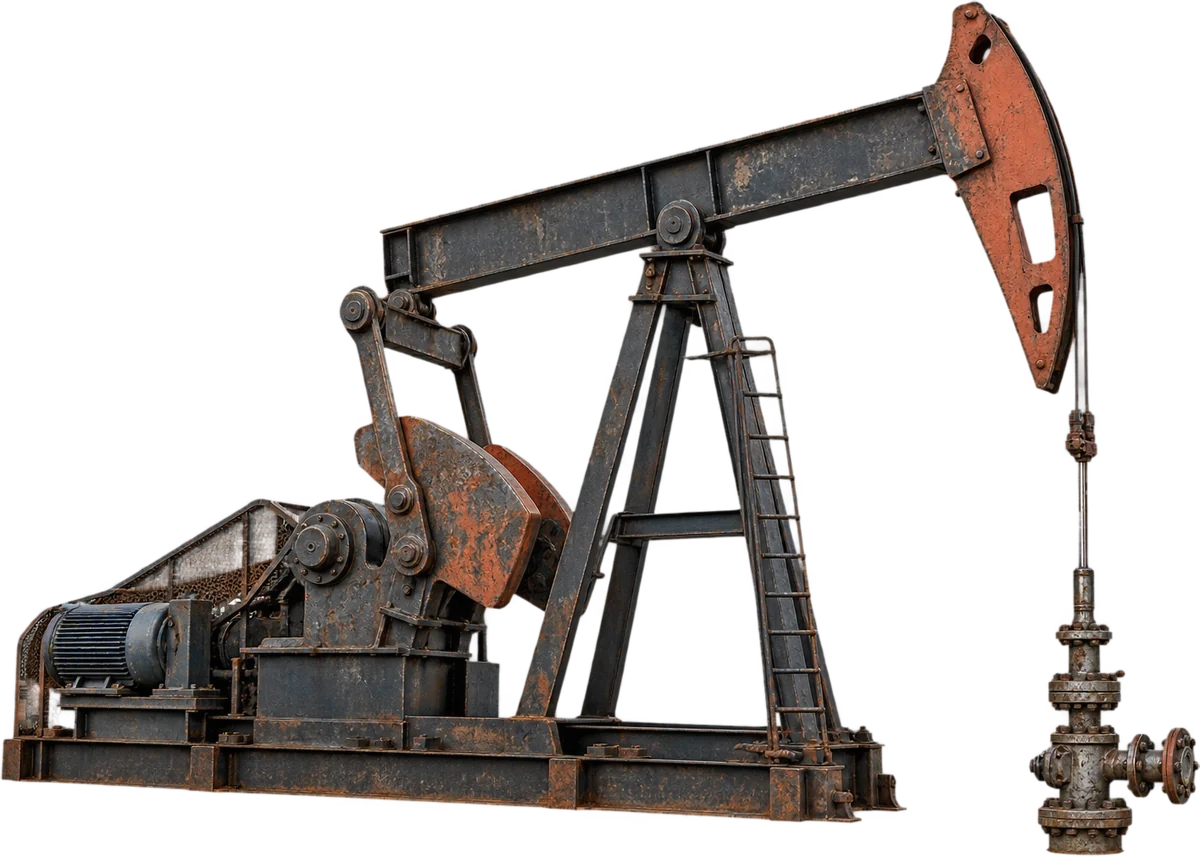
The cost of data lost inside controllers
Unexplained failures
Without history, every failure is analysed from what the operator remembers.
Calendar-based maintenance
Healthy parts are replaced by date while unwatched ones fail.
Isolated projects
Each sensor initiative brings its own platform and its data stays in a silo.
From the business question to the sensors that answer it
Online assessment
34 questions on machine and sensor data capture. When you finish you see your level by dimension.
30-minute review
Diego reviews with you the question the data must answer, which variables already exist in your PLCs and how long they are kept today.
Business question and architecture
We choose the use case with you (downtime, energy or condition), the pilot machines, connectivity and where data is stored.
Selection and integration
We compare platforms for your case and design how events reach maintenance, the MES or dashboards. Installation is done by a specialist provider.

Data, master records and access your company provides for an IIoT platform
- The decision to improve: maintenance, energy, quality or capacity
- List of pilot equipment with its PLCs, sensors and protocols
- Asset hierarchy: plant, area, line, equipment
- IT access to the plant network and cloud policy
- A plant owner who validates whether a reading makes physical sense
Deliverables of the IIoT analysis, selection and integration
Use case and variables
The decision, the variables behind it, their sampling rate and the threshold that triggers an action.
Use-case sheet
Data architecture
Gateways, protocols (OPC UA, MQTT), retention, compression and where the historian lives: plant, cloud or both.
Architecture diagram
Platform selection
Historian and gateways compared on your pilot equipment, per-tag licensing and three-year cost.
Decision matrix
Context for the business
How each data series is joined with the maintenance asset, the MES order and the ERP cost centre.
Asset and tag model
Typical risks of a IIoT project and how they are controlled
A pilot with no decision attached
ControlThe pilot starts with the use-case sheet and the threshold that triggers the action.
Tags without a naming standard
ControlA naming convention tied to the asset hierarchy is agreed before connecting the first device.
Opening the control network
ControlData leaves through a read-only gateway in a separate zone.
Scope limits and market options for IIoT
Limits
- We do not install sensors or gateways; the vendor or automation integrator does
- Failure prediction models need months of history and recorded failures to be trained
- Odoo IoT serves scales, printers and workstation devices, not as a process historian
Selection criteria
- Connectors for your controllers and sensors
- Time-series retention and querying
- Order, shift and lot context
- Device and network security
Odoo
Odoo IoT connects scales, printers and plant devices to Odoo orders. We assess it as one more option for narrow use cases.
Other platforms on the market
- AVEVA PI System
- Canary Historian
- Ignition
- AWS IoT SiteWise
- Azure IoT
- ThingWorx
In no order of preference.
Systems that exchange data with an IIoT platform
Supervisory control and data acquisition
process variables and alarms
See the systemMESManufacturing execution system
order and shift context
See the systemEAM/CMMSEnterprise asset management / maintenance management
events that open maintenance orders
See the systemBI/DWBusiness intelligence and data warehouse
aggregated series for dashboards
See the systemQMSQuality management system
process conditions per lot
See the systemIIoT assessment in 9 minutes
This assessment reviews how data from sensors, PLCs and fleet telemetry is captured, stored and used. The questions describe observable situations in field capture, the historian, calibration and use in maintenance.
Scored dimensions
- Use case per critical asset. It looks at whether each captured variable serves a concrete operations, maintenance or energy decision.
- Field capture and connectivity. It looks at where time series are stored, how new equipment is added and what happens to data when communication drops.
- Shift, asset and work front context. It looks at whether each data point is stored with its asset within an asset hierarchy and with the shift, work front or batch it belongs to.
- Series quality and calibration. It looks at whether series have synchronized time, whether gaps and duplicates are detected, and whether data from sensors with expired calibration is flagged.
- Use in maintenance and operations. It looks at whether data leaves the historian toward maintenance, dashboards and the ERP, and whether thresholds alert an owner with a defined action.
- Sensor and gateway security. It looks at whether there is a device inventory, unique credentials, updates and control over who views or exports plant data.
What you receive
At the end you receive your level in each dimension and the gaps ranked by priority. Each gap comes with a first action that maintenance and instrumentation can verify.
18 scored questions and 11 context questions (type of operation, size, current system). Context questions are not scored: they let us read the result against similar operations.
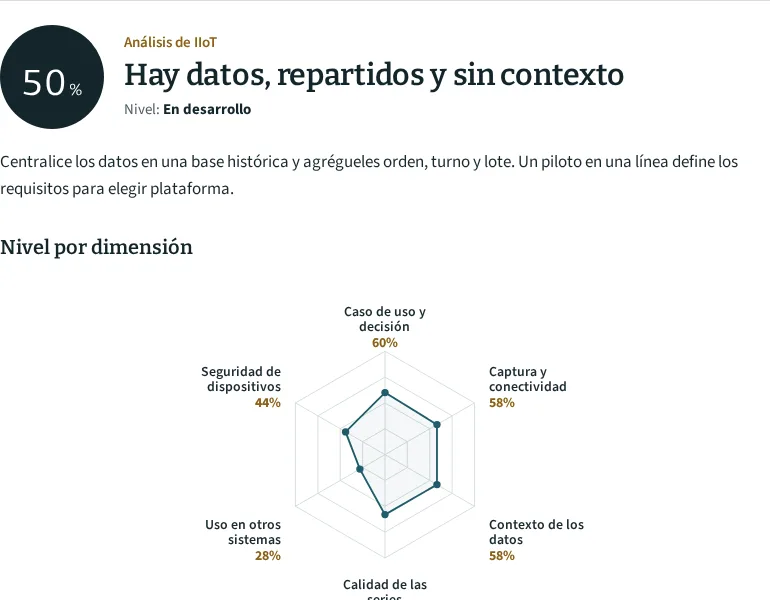
34 questions, 9 minutes
Example: if machine data is not linked to equipment, order or product, the result flags Data context and proposes an asset hierarchy before the pilot.
Answers about IIoT
IIoT is the connection of sensors and machines; the historian is the database that stores their readings over time. A project usually needs both.
It pays to start with one line or group of machines and a single business question, to measure value before scaling up.
The vendor or automation integrator installs them. We define the use case, the architecture and the asset model, and check that the pilot data answers the question asked.
Review your IIoT result with Diego
Twenty minutes by video call or WhatsApp. Have at hand the decision you want to make with the data and the list of candidate equipment.
Assessment first: the review uses your answers.